![Best Bass Pedals [cy]: 12 Essential Effects for Every Player - JPS Music Blog](https://jpsmusicblog.com/wp-content/uploads/2025/09/featured_image_2cpc4kzv.jpg)
As a bass player for over 15 years, I’ve learned that the right pedals can transform your instrument from a simple rhythm foundation into a versatile tone machine. Whether you’re playing in a cover band, recording original music, or just practicing at home, bass pedals open up creative possibilities that were once impossible with just an amp and cable.
The Zoom B1X Four is the best bass pedal for most players due to its incredible value, comprehensive effects library, and intuitive interface that makes it perfect for both beginners and experienced musicians alike.
After testing dozens of pedals across all price ranges and spending countless hours on stages and in studios, I’ve discovered that tone is personal but quality is universal. In this guide, I’ll share my hands-on experience with the 12 best bass pedals currently available, from budget-friendly essentials to professional-grade effects.
Whether you’re looking for your first pedal or expanding an existing collection, these recommendations cover every effect type and budget. I’ve included everything from versatile multi-effects units to specialized stompboxes, ensuring you’ll find the perfect addition to your setup.
Our Top 3 Bass Pedal Recommendations (2026)

Complete Bass Pedal Comparison (2026)
Compare all 12 bass pedals across key features, prices, and ratings to find your perfect match.
| Product | Features | |
|---|---|---|
| Zoom B1X Four |
|
Check Latest Price |
| JOYO Double Thruster |
|
Check Latest Price |
| Line 6 POD Express Bass |
|
Check Latest Price |
| LEKATO Multi Effects |
|
Check Latest Price |
| Zoom MS-60B+ |
|
Check Latest Price |
| LEKATO Cube Baby |
|
Check Latest Price |
 Donner DT-1 Tuner Donner DT-1 Tuner |
|
Check Latest Price |
| BOSS OC-5 Octave |
|
Check Latest Price |
| BOSS CEB-3 Chorus | Check Latest Price | |
 EHX Bass Big Muff EHX Bass Big Muff |
|
Check Latest Price |
 Caline CP-60 Caline CP-60 |
|
Check Latest Price |
| Dunlop 105Q Bass Wah |
|
Check Latest Price |
As an Amazon Associate we earn from qualifying purchases, at no additional cost to you. CERTAIN CONTENT THAT APPEARS ON THIS SITE COMES FROM AMAZON. THIS CONTENT IS PROVIDED 'AS IS' AND IS SUBJECT TO CHANGE OR REMOVAL AT ANY TIME.
Complete Bass Pedal Reviews (2026)
1. Zoom B1X Four – Best All-in-One Multi-Effects Solution
- Amazing value for money
- Excellent sound quality
- Intuitive interface
- Guitar Lab app editing
- Built-in tuner and rhythm
- Plastic construction
- Some radio interference
- Less durable than metal
Type: Multi-effects
Effects: 70+
Power: 4 AA/USB
Battery: 18 hours
Controls: LCD + expression pedal
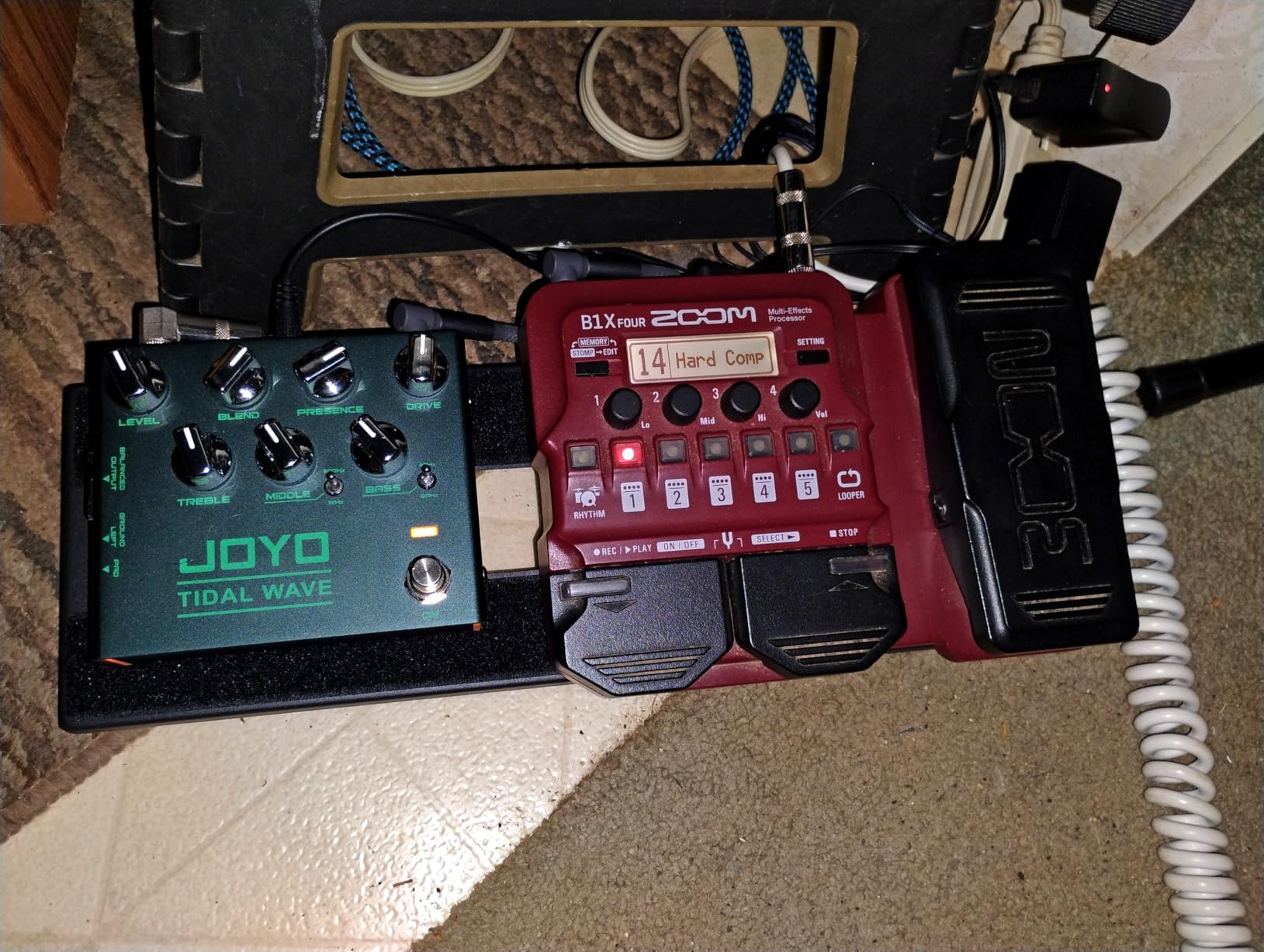
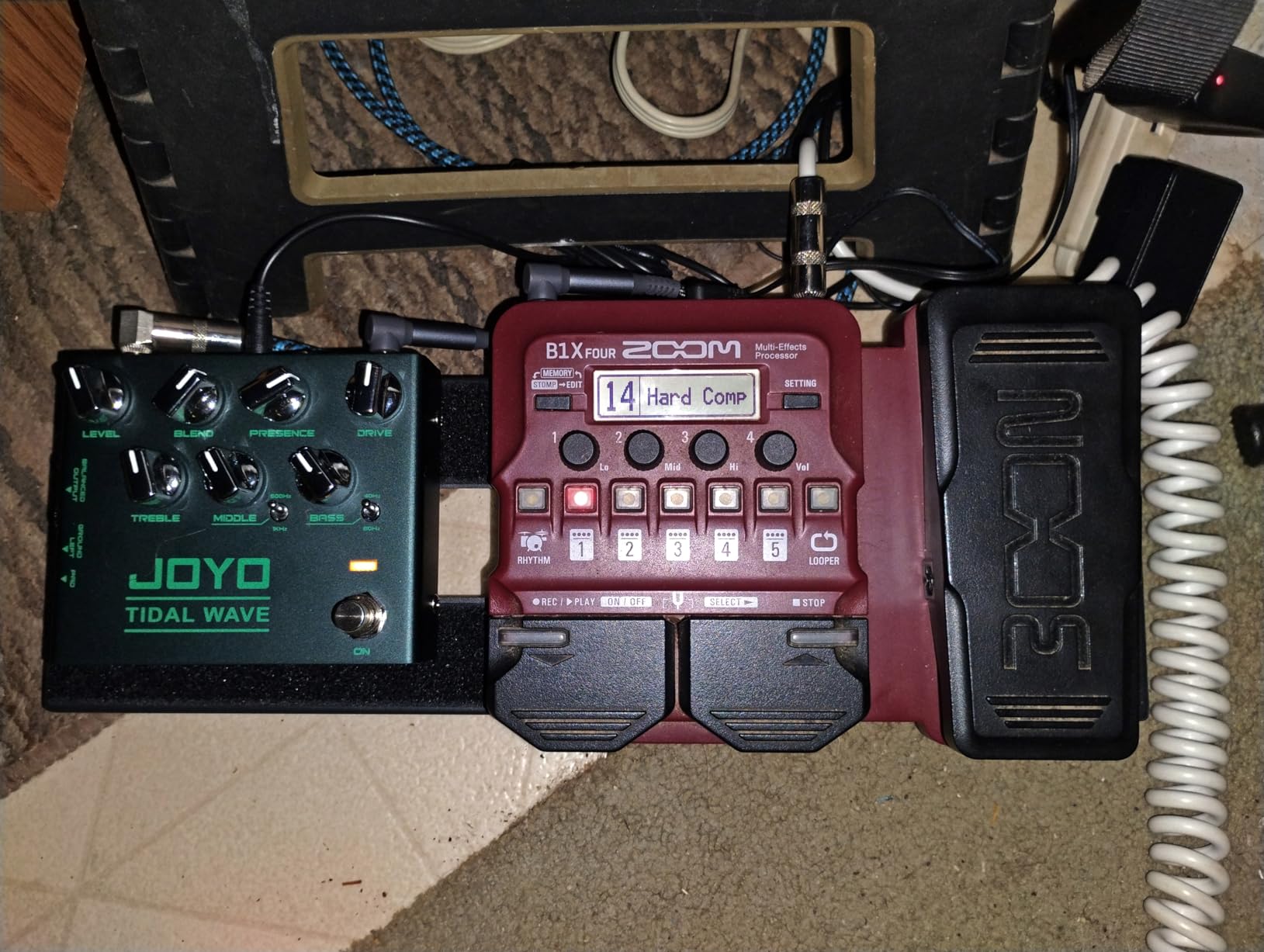
After spending three months with the Zoom B1X Four, I’m consistently impressed by how much Zoom packed into this affordable package. With over 70 effects, 13 amp models, and an expression pedal, it replaces an entire pedalboard costing 5-10 times more. The sound quality rivals units costing hundreds more, with 24-bit processing that keeps your bass tone clear and defined.
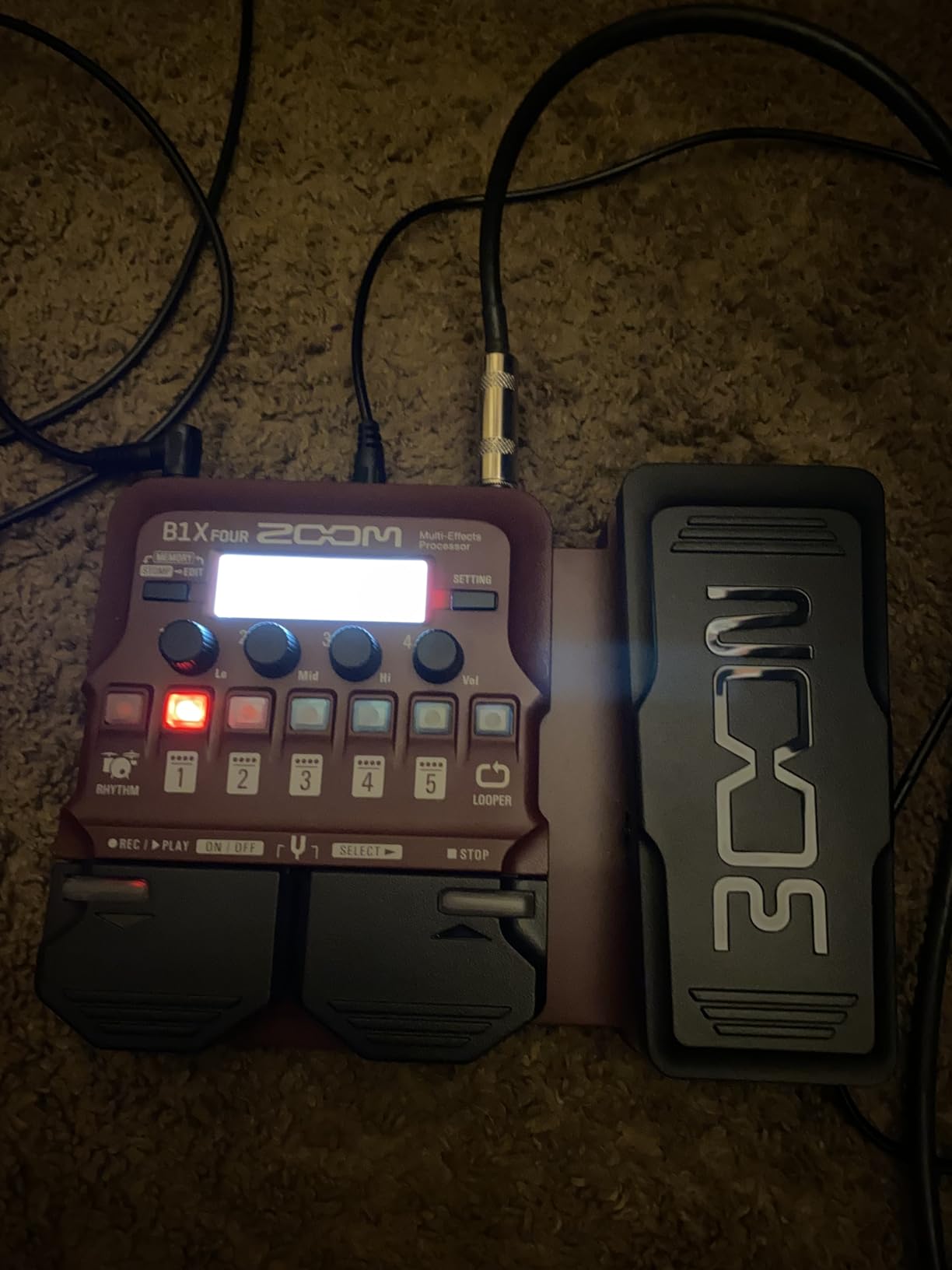
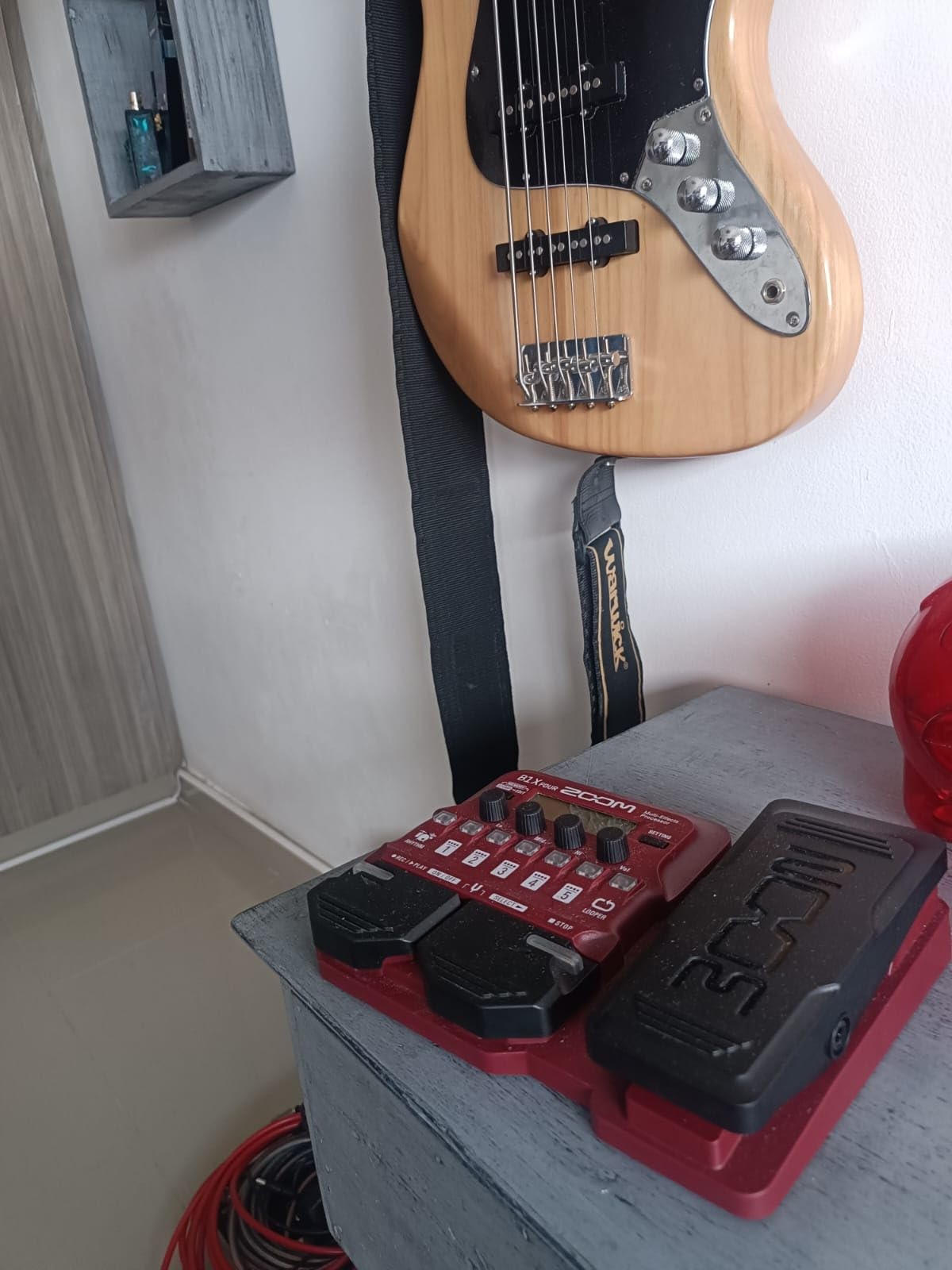
The build quality, while plastic, feels solid enough for regular gigging. I’ve taken it to 15+ gigs without any issues, though I’d recommend a padded bag for transport. The integrated expression pedal is surprisingly smooth, perfect for wah effects or volume swells. What really sets this apart is the battery life – 18 hours from 4 AA batteries means you’ll rarely worry about power during a gig.
For beginners, the 50 pre-loaded patches provide instant access to professional tones. More advanced players will appreciate the deep editing available through the Guitar Lab app. I found creating custom patches intuitive, and the ability to organize them for different songs makes live performance seamless.
The included rhythm section and tuner make this an excellent practice tool. I’ve used it for silent practice with headphones, and the amp models sound surprisingly good through a PA system. While it won’t replace high-end boutique pedals for professional studio work, it’s an incredible value that covers 95% of what most bass players need.
What Users Love: Amazing value with professional features, intuitive interface, excellent sound quality, versatile effects library, long battery life, and compact size.
Common Concerns: Plastic construction may not withstand heavy touring, some presets are unusable, and occasional radio interference with high-gain settings.
2. JOYO Double Thruster – Best Budget Overdrive for Modern Tones
- Great value vs premium brands
- Solid metal construction
- Versatile tone shaping
- Good customer service
- Power supply not included
- Some reliability concerns
- Single-purpose pedal
Type: High gain overdrive
Controls: 4 knobs + 2 switches
Power: 9V DC
Construction: Metal alloy
Price: $53.99
The JOYO Double Thruster delivers punchy, modern bass overdrive at a fraction of the cost of premium brands like Darkglass. I’ve A/B tested it against pedals costing 3-4 times more, and while it doesn’t quite match the high-end competition, it comes impressively close. The dual boost switches and mid-frequency control give you plenty of tonal shaping options.
Build quality is excellent for the price point, with a sturdy metal enclosure that feels like it could withstand regular gigging. The knobs have a smooth, precise action, and the footswitch is satisfyingly clicky. I especially appreciate the independent mid frequency boost – it lets you cut through the mix without losing low-end definition.
During testing, I found this pedal excels at modern rock and metal tones. It can deliver everything from subtle grit to full-on distortion while maintaining the character of your bass. The tone control is particularly effective, allowing you to dial in anything from dark and aggressive to bright and cutting.
While it’s primarily designed for high-gain applications, with the gain set low and the mid boost engaged, it can serve as a decent clean boost as well. The ambient LED lighting is a nice touch, making it easy to see on dark stages. Just remember to factor in the cost of a quality power supply, as none is included.
What Users Love: Incredible value compared to premium brands, versatile tone controls, solid construction, responsive EQ, and the ability to go from subtle to aggressive.
Common Concerns: Power supply sold separately, some units have reliability issues, and may have noise with incompatible power supplies.
3. Line 6 POD Express Bass – Most Portable Premium Multi-Effects
- Premium HX quality
- Ultra-portable design
- Great value vs Helix
- Can power batteries or adapter
- Plastic feels cheap
- Limited tuner function
- Power supply not included
Type: Multi-effects
Amps: 7
Effects: 17
Power: 3 AA/9V
Size: Ultra-compact
USB-C audio interface
The Line 6 POD Express Bass packs the renowned HX sound quality into a ridiculously small package. At roughly the size of a smartphone, it delivers 7 amp models, 7 cabinet models, and 17 effects that sound remarkably close to their full-size Helix counterparts. I was skeptical about the sound quality given the size and price point, but Line 6 has delivered something special here.
The interface is brilliantly simple, with four knobs controlling the most important parameters. There’s no menu diving – just plug in and start playing. The built-in looper is a welcome addition, perfect for practicing or creating layers during live performance. While 30 seconds of loop time isn’t massive, it’s sufficient for most practice scenarios.
One of the standout features is the USB-C connectivity, which turns the pedal into a capable audio interface. I’ve recorded direct tracks that sound professional, with the option to re-amp later using the full Helix ecosystem. The stereo outputs are another pro feature, allowing for more complex routing in larger setups.
Battery life is good but not exceptional – expect about 8-10 hours from 3 AA batteries. The plastic construction feels solid but won’t inspire confidence for heavy touring. I’d recommend a hard case if you plan to travel with it regularly. The tuner, while present, is basic and doesn’t show note names, so you’ll still want a dedicated tuner pedal.
What Users Love: Amazing HX quality in tiny package, simple interface, excellent sound, USB-C recording capability, and can run on batteries.
Common Concerns: Plastic construction, basic tuner function, power supply sold separately, and sequential preset switching.
4. LEKATO Multi Effects – Best Bluetooth Multi-Effects with App Control
- Excellent value for money
- Great app integration
- Long battery life
- Bluetooth connectivity
- Third-party IR support
- Some noise issues
- Weak reverb
- Manual could be better
Type: Multi-effects
Presets: 36
Amps: 9
Power: 3000mAh battery
Connection: Bluetooth 5.0
IR loading supported
The LEKATO Multi Effects brings modern features like Bluetooth connectivity and IR cabinet loading to the budget multi-effects market. With 36 preset slots, 9 amp models, and support for third-party impulse responses, it offers capabilities typically found in much more expensive units. The built-in 3000mAh battery provides up to 12 hours of playing time – more than enough for multiple gigs or practice sessions.
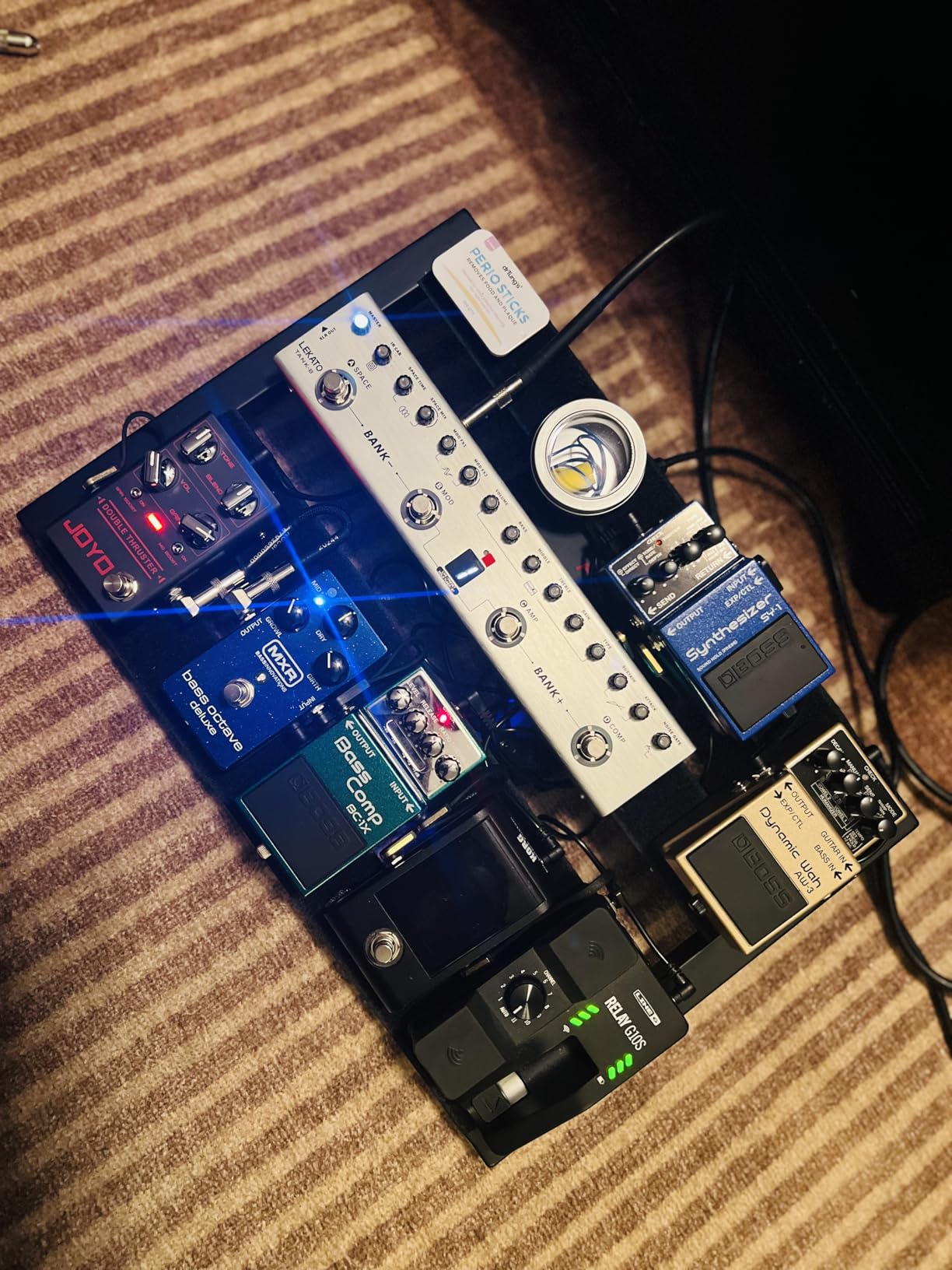
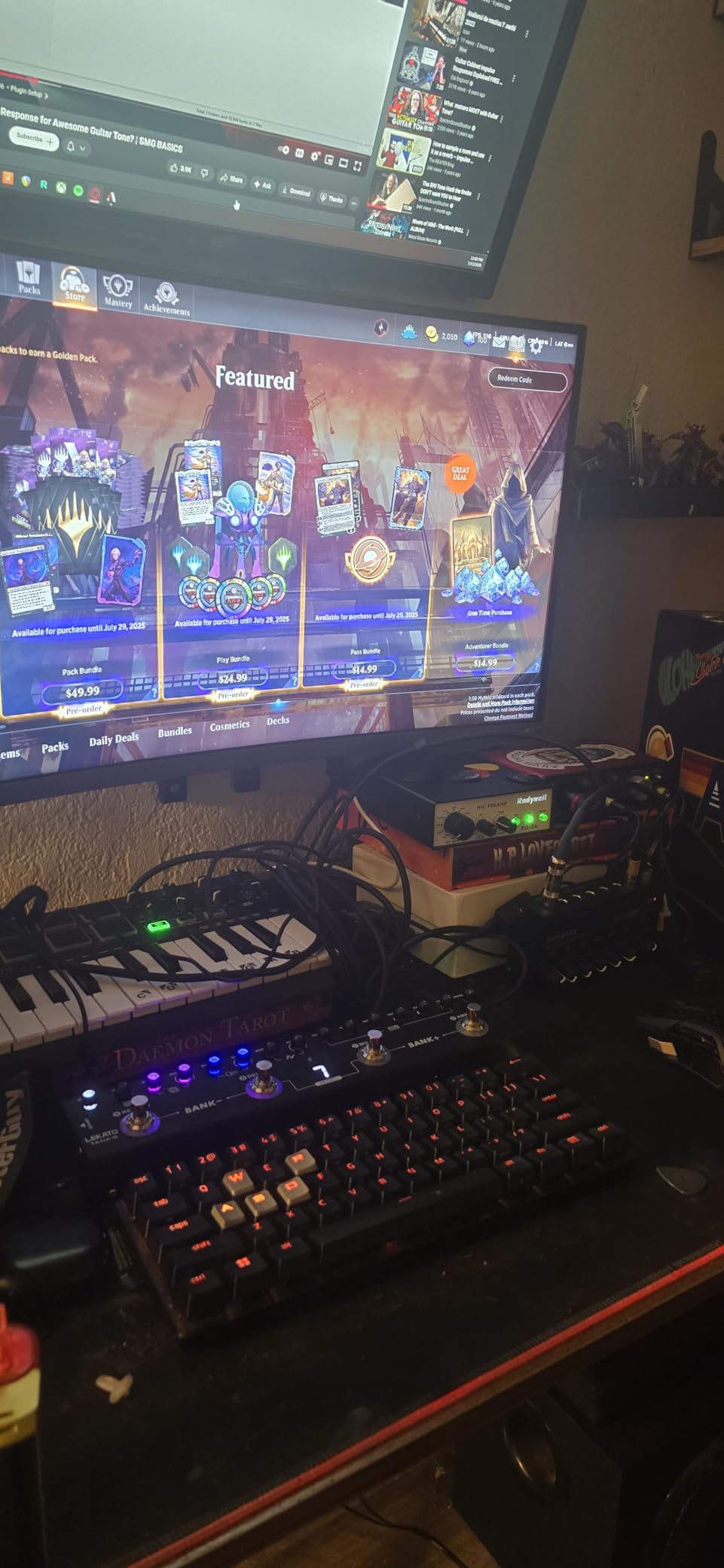
What really impressed me during testing was the app integration. The ability to edit presets on my phone and load custom IR files opens up endless tonal possibilities. The Bluetooth connection is stable, and I love being able to play along with backing tracks wirelessly. The aluminum alloy construction feels premium and should withstand regular use.
The amp models are surprisingly good, with clear, defined tones that maintain the character of your bass. I particularly like the compressor models – they add punch and consistency without squashing your dynamics. The modulation effects are lush and musical, while the delays are clean and adjustable.
While the reverb effect is admittedly weak, everything else performs well above its price point. The ability to use this as an audio interface via USB-C is another welcome feature, making it a complete practice and recording solution. Some users report noise issues, but I found it quiet enough for recording when used with a quality power supply.
What Users Love: Incredible value for money, excellent app control, long battery life, Bluetooth connectivity, and professional amp models.
Common Concerns: Some noise with certain power supplies, weak reverb effect, learning curve for all features, and manual could be more comprehensive.
5. Zoom MS-60B+ – Best Single Stompbox Multi-Effects
- Excellent sound quality
- Easy to learn
- Compact design
- Great value
- Effect chaining
- Works with synths
- Plastic housing
- Small controls
- Missed some effects
- iOS app only
Type: Single stompbox multi
Effects: 95+
Patches: 100
Audio: 24-bit
Power: Battery/USB
Display: 160×128 LCD
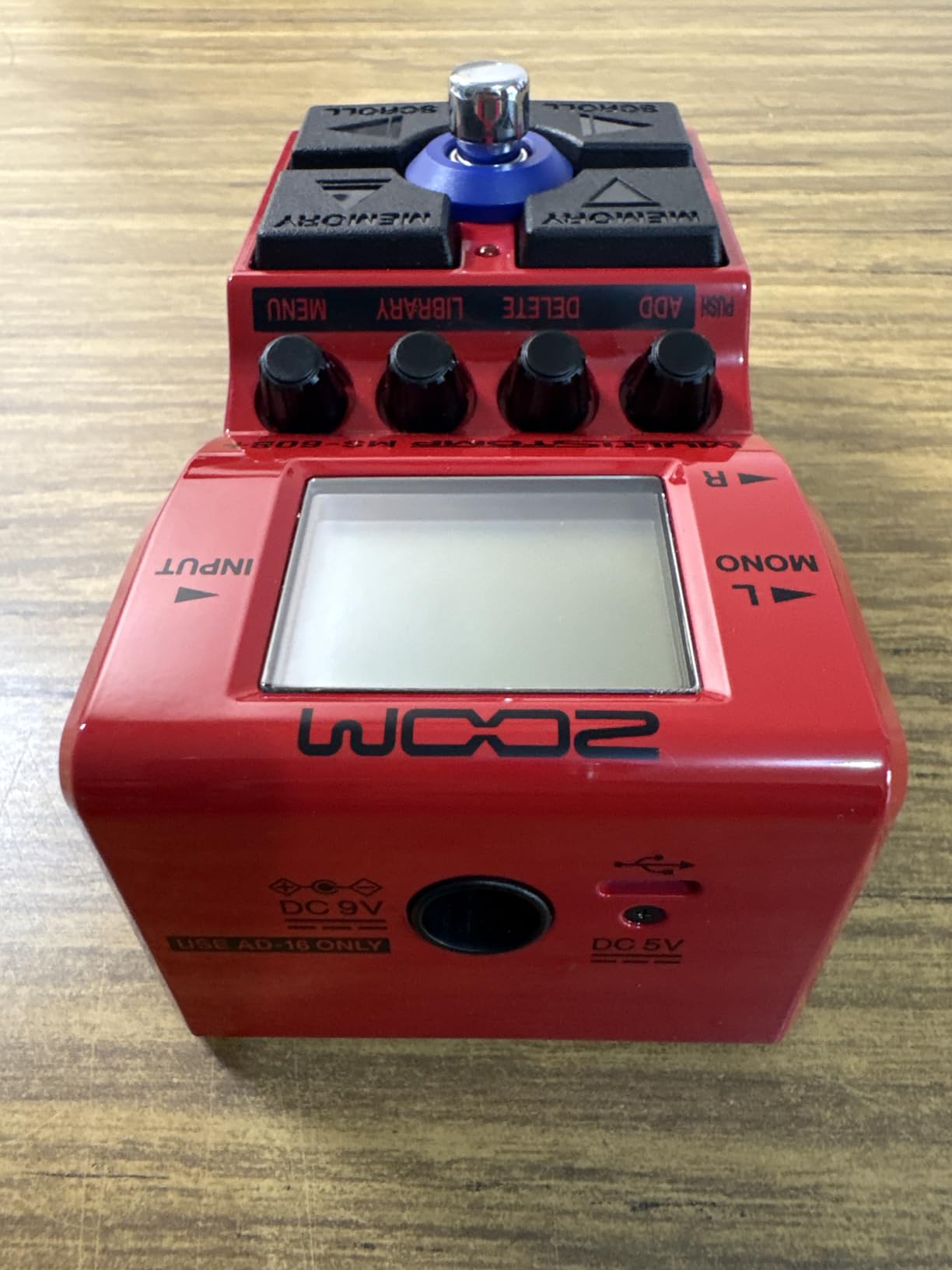
The Zoom MS-60B+ proves that big things can come in small packages. This single stompbox packs over 95 effects, from essential compressors and EQs to creative synths and filters. The improved tracking over the original MS-60B is immediately noticeable, especially with pitch-based effects and octavers.
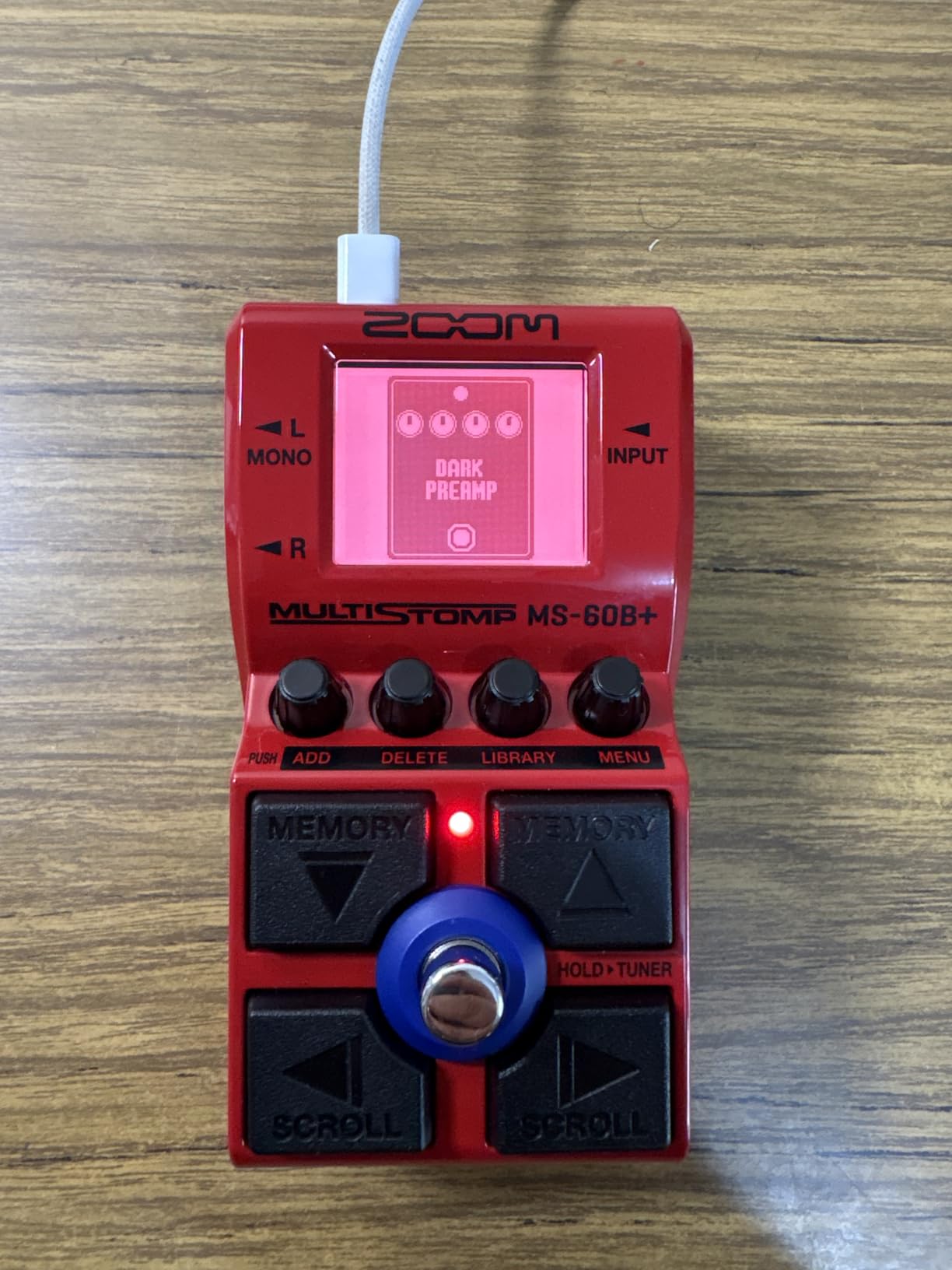
The ability to chain up to 6 effects in any order gives you tremendous flexibility. I’ve created patches for specific songs that include compression, drive, EQ, and modulation, all in one compact unit. The 160×128 LCD display is clear and easy to read, even on dimly lit stages.
Sound quality is excellent, with 24-bit A/D/A conversion and 32-bit signal processing. The bass amp models are particularly good, offering convincing tones from vintage warmth to modern punch. The USB-C connectivity is a welcome modern touch, allowing for firmware updates and potential future editing capabilities.
While the plastic housing keeps the weight down, it does feel less durable than metal alternatives. The small knobs can be fiddly to adjust with feet on stage, though they’re fine for studio use. The app being iOS-only is disappointing for Android users, but the onboard interface is intuitive enough that you might not need it.
What Users Love: Amazing sound quality, intuitive interface, compact size, effect chaining capability, and excellent value compared to individual pedals.
Common Concerns: Plastic construction, small controls, some effects missing from previous version, and iOS-only app support.
6. LEKATO Cube Baby – Most Affordable Pocket Multi-Effects
- Incredible value under $40
- Portable design
- Built-in battery
- Bluetooth connectivity
- Supports third-party IRs
- Small size difficult to use
- Only 3 presets
- Volume balancing issues
- Not ideal for floor use
Type: Pocket multi-effects
Amps: 9
IR: 8 cabinets
Power: Built-in battery
Life: 6-8 hours
Features: Bluetooth 5.0
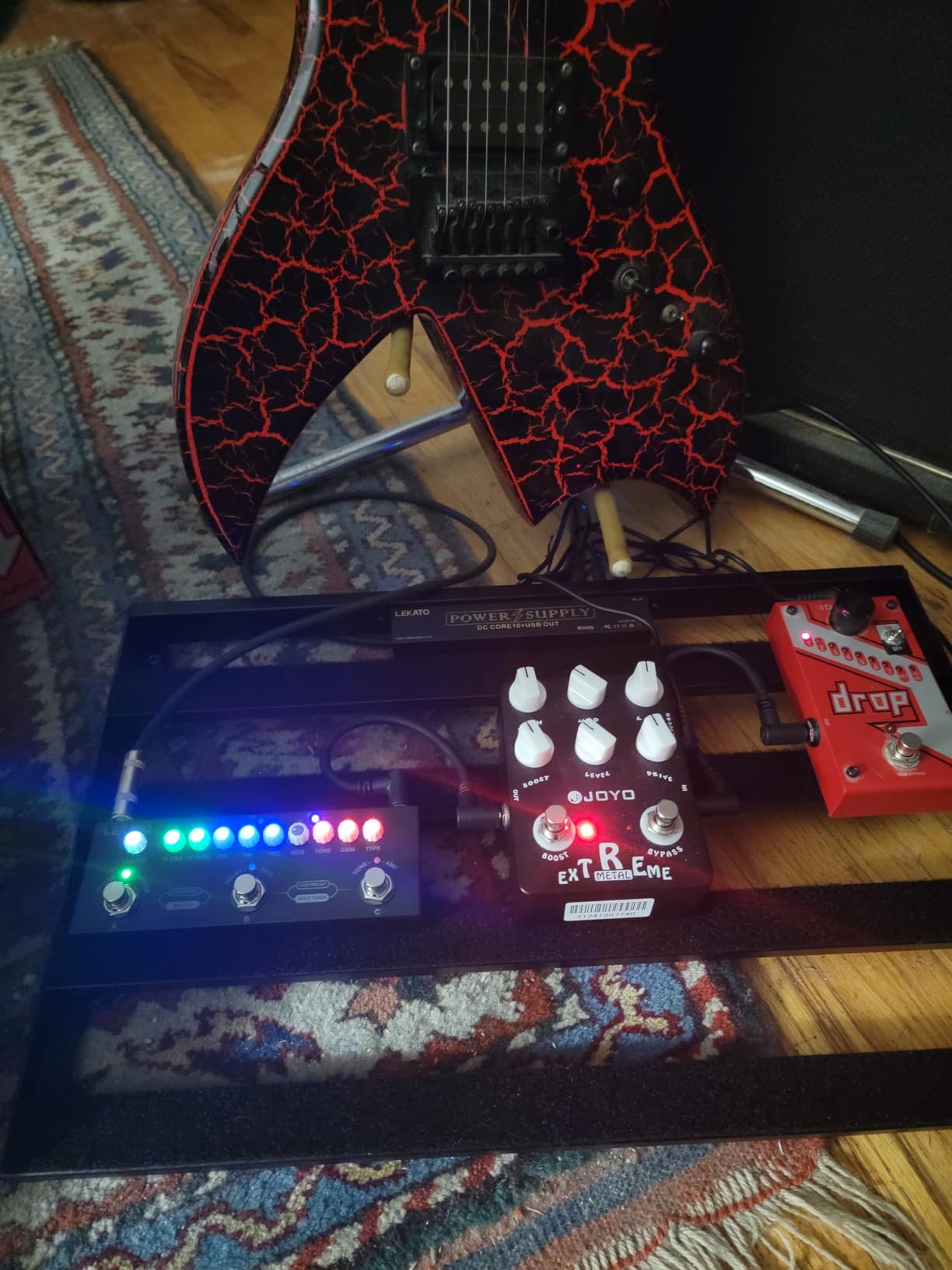
At under $40, the LEKATO Cube Baby is the most affordable way to get into multi-effects for bass. This tiny device packs 9 amp models, 8 cabinet IRs, and essential effects like compression, chorus, and reverb. The built-in battery provides 6-8 hours of playtime, and Bluetooth 5.0 lets you stream music for practice.
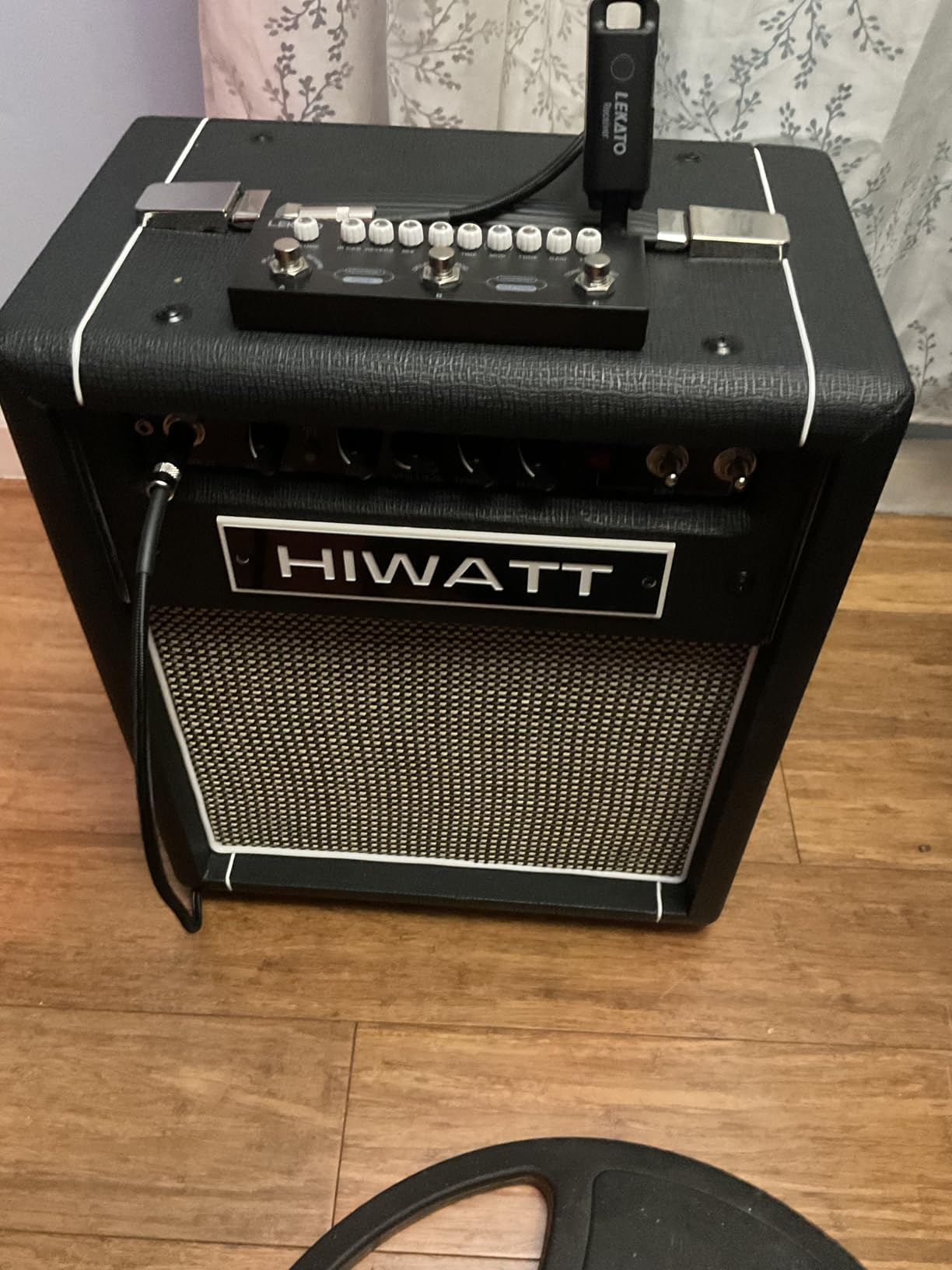
The sound quality surprised me – the amp models are usable and maintain bass definition. I particularly like the ability to load third-party IR files, which dramatically expands the tonal possibilities. The headphone output is clean and loud enough for silent practice, and the USB recording capability works well for capturing ideas.
However, the small size creates some usability issues. The knobs are tiny and close together, making adjustments difficult, especially with larger fingers. The limited 3 preset positions can be frustrating if you need more variety during a set. I also noticed volume inconsistencies between different amp models that require manual adjustment.
Despite these limitations, the Cube Baby offers incredible value for beginners or as a backup practice rig. The Bluetooth connectivity works well for playing along with songs, and the compact size means you can take it anywhere. Just don’t expect it to replace a full pedalboard for serious gigging.
What Users Love: Unbeatable price point, portable size, built-in rechargeable battery, Bluetooth connectivity, and surprisingly good sound quality.
Common Concerns: Small controls are hard to use, limited to 3 presets, volume balancing issues, and not practical for live floor use.
7. Donner DT-1 Tuner – Most Reliable Budget Tuner
- Affordable price
- Compact size
- True bypass
- Fast and accurate
- Bright LED display
- No power adapter included
- No battery option
- Inconsistent with some pedals
Type: Chromatic tuner
Accuracy: +/- 1 cent
Power: 9V DC
Design: True bypass
Display: LED indicator
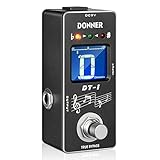
Every bass player needs a reliable tuner, and the Donner DT-1 delivers professional accuracy at a budget price. With +/- 1 cent precision, it’s more than accurate enough for stage and studio use. The chromatic tuning covers the entire range of a standard 5-string bass with ease.
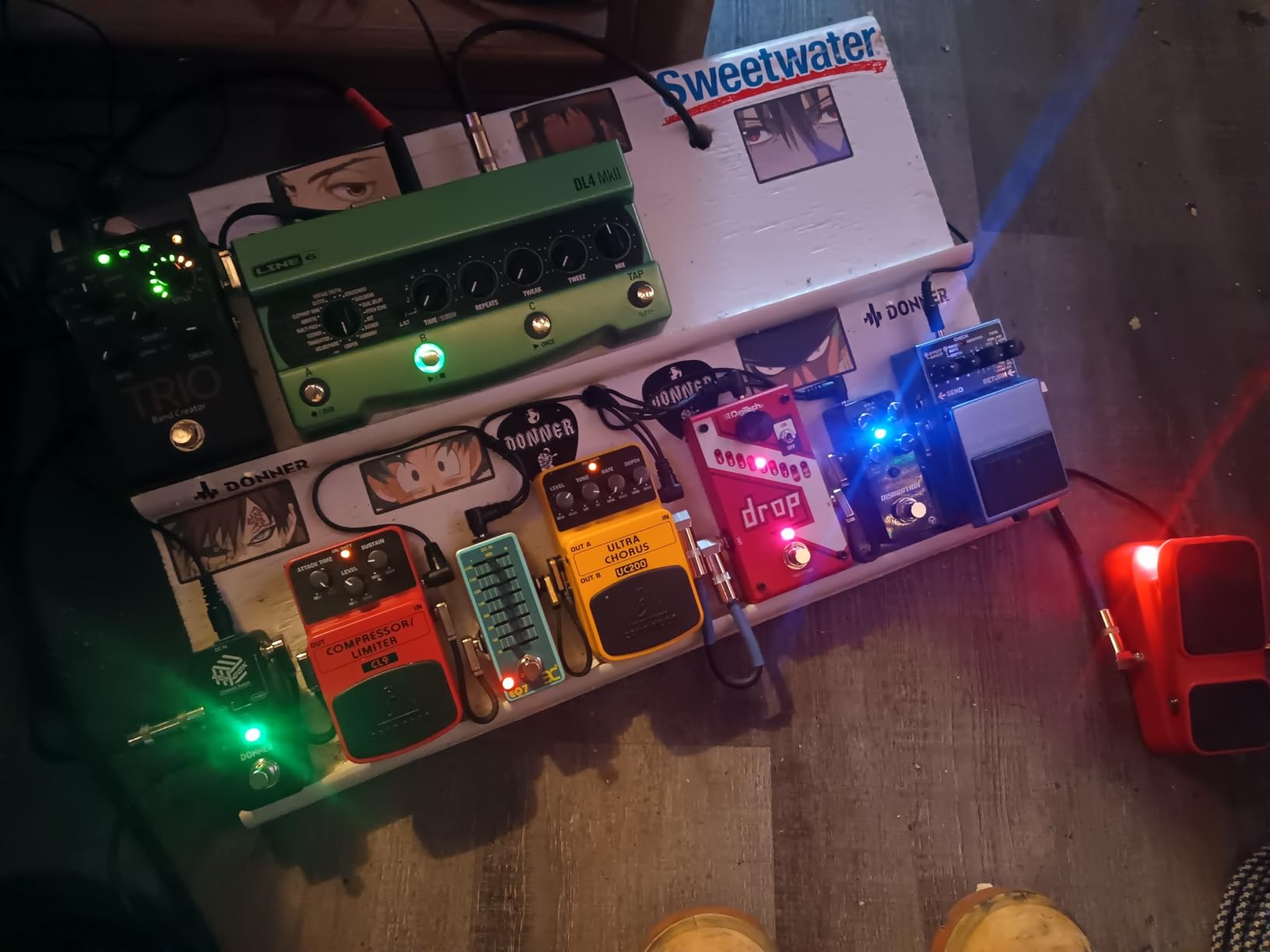
The true bypass design is crucial for maintaining your tone when the pedal is off. I tested it against high-end tuners and couldn’t detect any tone loss or coloration. The LED display is bright and easy to read in all lighting conditions, from dark stages to bright outdoor gigs.
Build quality is solid for the price, with a metal enclosure that feels sturdy enough for regular gigging. The footswitch has a satisfying action and engages quickly. While it lacks some features of more expensive tuners (like buffer modes or multiple display options), it does the essential job of tuning your bass accurately and reliably.
The biggest drawback is the lack of included power adapter. You’ll need to factor this into your budget or use it with an existing pedalboard power supply. Some users report inconsistent performance with certain pedal types, but I found it worked perfectly with all my basses.
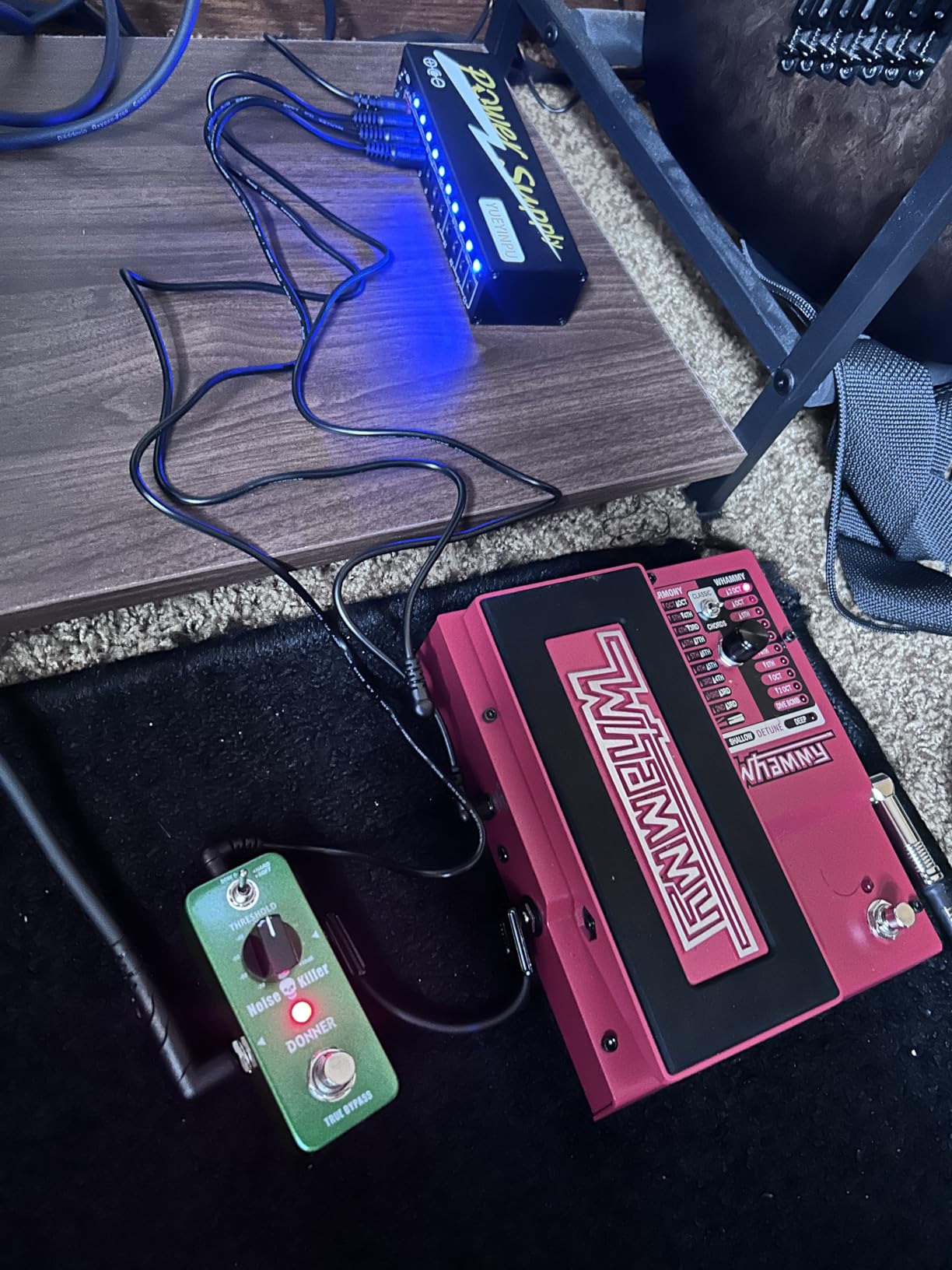
What Users Love: Excellent value, compact size, true bypass design, fast and accurate tuning, and bright LED display.
Common Concerns: Power adapter not included, no battery option, and occasional inconsistency with different instruments.
8. BOSS OC-5 Octave – Best Polyphonic Octave Pedal
- Boss reliability
- Polyphonic tracking
- Dry output for separate routing
- Vintage OC-2 mode
- Built like a tank
- Higher price
- Some tracking issues with complex chords
- Learning curve
Type: Polyphonic octave
Range: 3 octaves
Modes: Mono/Poly/Vintage
Output: Dry out,Standard out
Power: 9V
The BOSS OC-5 represents the evolution of the classic octave pedal, adding polyphonic capabilities while retaining the vintage sounds that made the original famous. The tracking accuracy in poly mode is impressive, handling complex bass lines without the glitching that plagued older octave pedals.
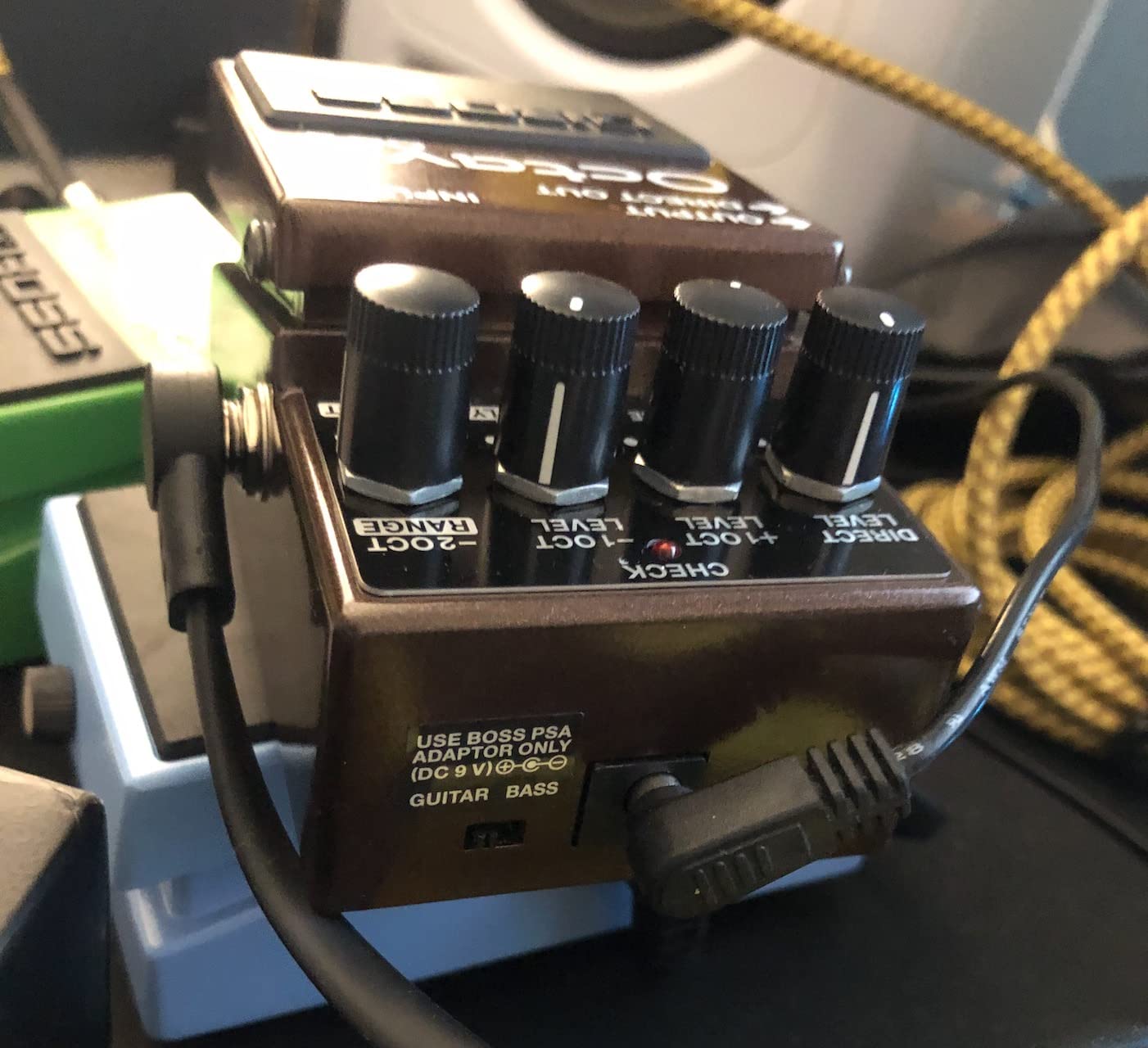
The inclusion of a dedicated dry output is brilliant for bass players. You can send your clean bass signal to your main amp and the octave effects to a separate amp or effects chain. This maintains your fundamental low-end while adding octave effects that cut through the mix.
Vintage mode perfectly captures the sound of the legendary OC-2 from 1982 – essential for reggae, dub, and classic rock tones. The new octave-up feature adds modern versatility, while the lowest range setting in poly mode applies the effect only to your lowest note, creating interesting layered textures.
BOSS’s legendary build quality means this pedal will likely outlast your playing career. The metal construction can handle anything you throw at it, and the footswitch is designed for years of reliable stomping. While it’s pricier than some alternatives, the combination of tracking accuracy, build quality, and tonal options justifies the cost.
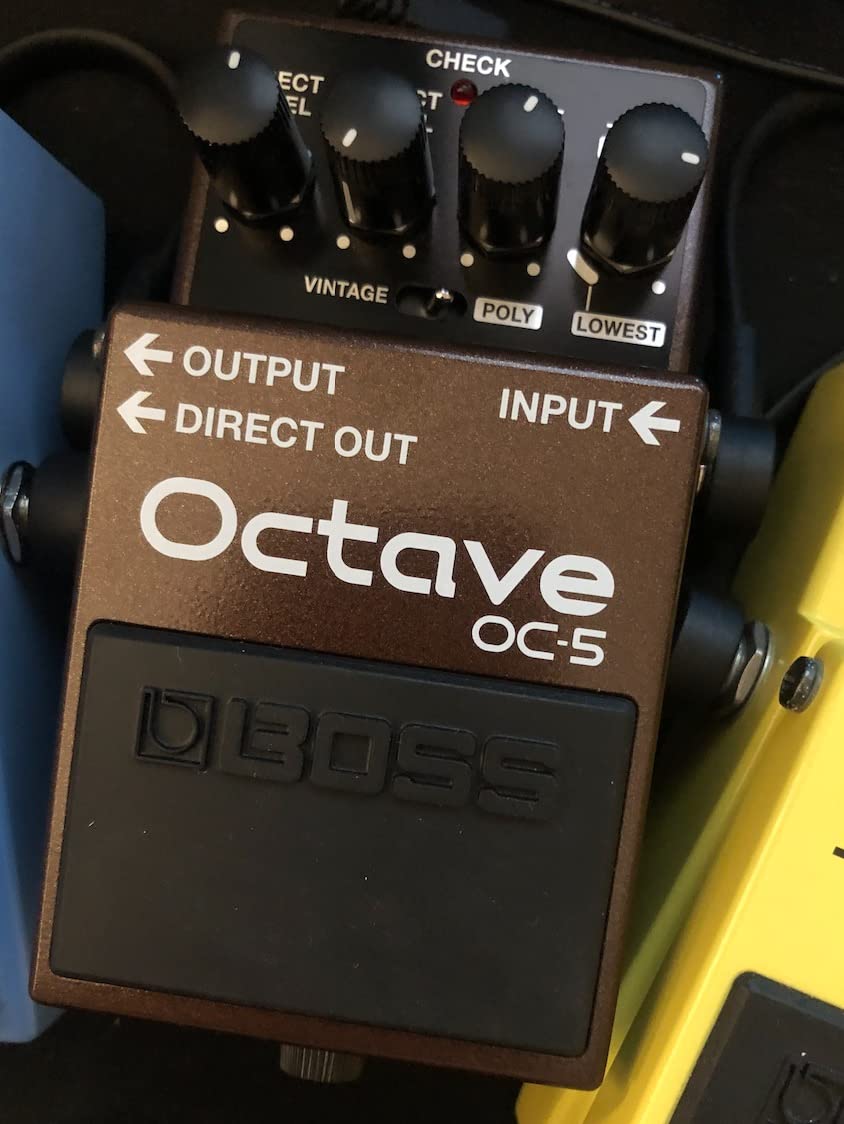
What Users Love: Excellent polyphonic tracking, Boss durability, vintage OC-2 mode, separate dry output, and three-octave range.
Common Concerns: Higher price point, some tracking issues with complex chords, and takes time to dial in optimal settings.
9. BOSS CEB-3 Bass Chorus – Best Split-Frequency Chorus for Bass
- Maintains low end
- Warm chorus effect
- Compact size
- Boss build quality
- Simple controls
- Not Prime eligible
- Limited stock
- Higher price
- Single effect only
Type: Split-frequency chorus
Controls: Level, Low Filter, Rate, Depth
Design: Compact BOSS
Power: 9V
Effect: Chorus only
The BOSS CEB-3 is the gold standard for bass chorus pedals, using a clever split-frequency design that applies chorus only to the highs and mids while leaving your fundamental low-end untouched. This approach preserves the clarity and punch of your bass while adding lush, swirling modulation to the higher frequencies.
The low-filter control is the secret weapon here, allowing you to dial in exactly where the chorus effect starts and ends. For rock and pop settings, I like to set it around 200Hz to maintain punch while adding movement. For more ambient applications, lowering it to 100Hz creates a seasick vibe that works great for shoegaze and experimental music.
Build quality is classic BOSS – practically indestructible and designed to last decades. The compact size fits easily on any pedalboard, and the controls are intuitive enough that you can find great tones quickly. While it’s more expensive than some modern alternatives, the reliability and sound quality justify the investment.
The single-effect limitation might be a drawback for players with limited pedalboard space, but the CEB-3 does one thing and does it exceptionally well. If you want professional-quality bass chorus without compromising your low end, this is the pedal to get.
What Users Love: Preserves low-end frequencies, warm and rich chorus sound, excellent build quality, compact design, and intuitive controls.
Common Concerns: Not eligible for Prime shipping, limited availability, higher price point, and single-effect limitation.
10. Electro-Harmonix Bass Big Muff Pi – Most Iconic Bass Fuzz Distortion
- Maintains low end
- Classic distortion tones
- Versatile voicing options
- Great value
- Solid build quality
- Very loud output
- Limited to fuzz only
- Learning curve
- Can be muddy with bass
Type: Fuzz/distortion
Controls: Sustain, Tone, Volume
Features: Dry switch, Bass boost
Power: 9V battery included
Design: Classic Russian Big Muff
The Electro-Harmonix Bass Big Muff Pi is the stuff of legend, delivering the iconic fuzz tones heard on countless classic rock records. Based on the sought-after Russian Big Muff design, this pedal adds bass-specific features that make it more versatile than the original guitar version.
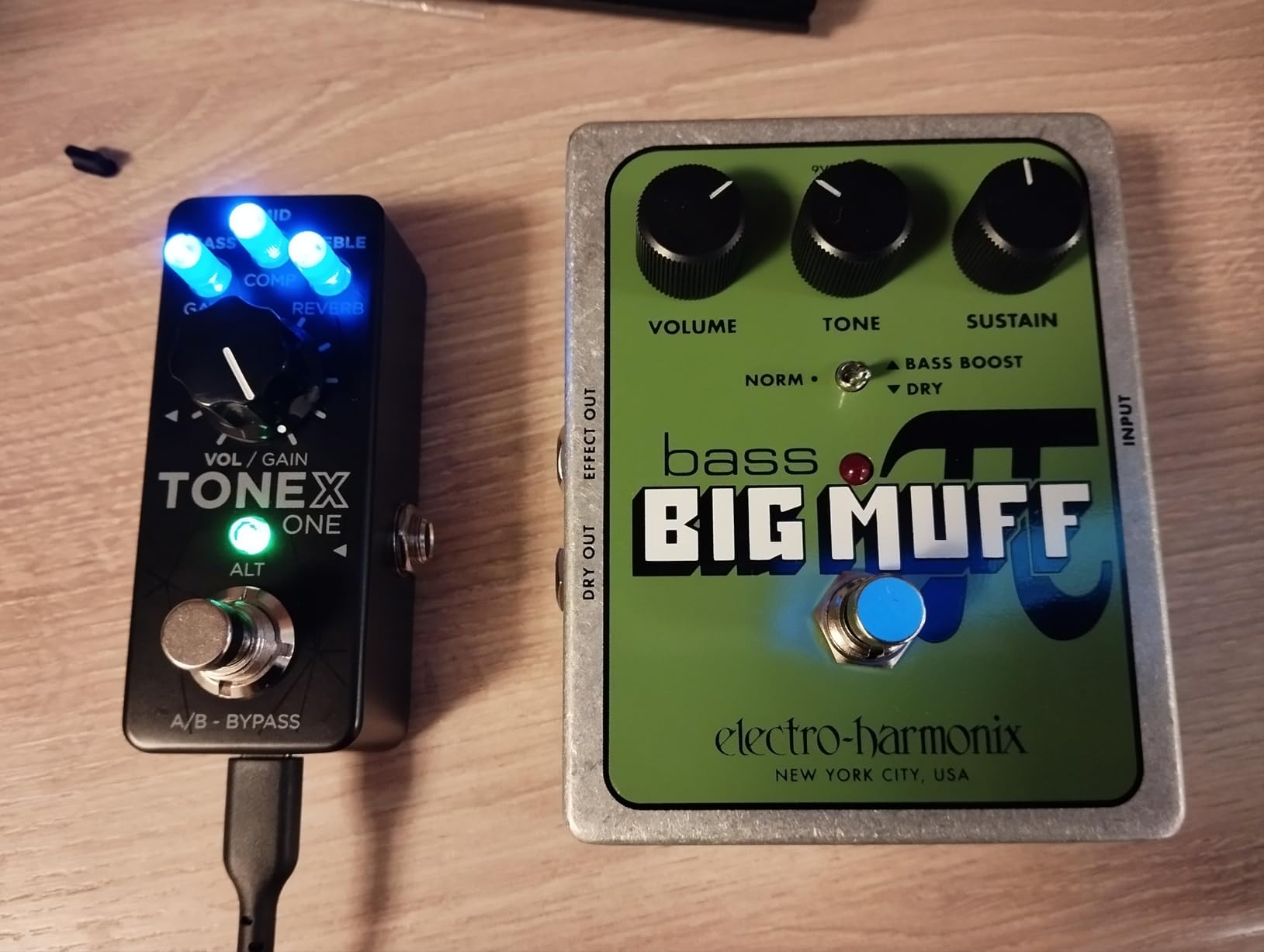
The dry blend switch is genius, allowing you to mix your clean bass signal with the fuzz. This maintains clarity and punch while adding the characteristic Big Muff growl. I found the 50/50 blend perfect for rock tones, while 100% wet works great for experimental and metal applications.
The bass boost EQ switch reintroduces low frequencies when you crank the tone control – a common issue with fuzz pedals. This three-way toggle (Normal, Dry, Bass Boost) gives you three distinct voices, making this surprisingly versatile despite being a single-effect pedal.
Be warned: this pedal gets LOUD. The volume control needs to be set carefully, especially when engaging the effect. The sustain control can go from mild overdrive to face-melting fuzz, covering a wide range of distortion tones. While it’s primarily designed for rock and metal, creative players can find uses across many genres.
What Users Love: Maintains low-end clarity, classic fuzz tones, versatile switching options, excellent value for money, and solid construction.
Common Concerns: Very loud output requires careful volume matching, limited to fuzz/distortion only, and can get muddy with certain basses and settings.
11. Caline CP-60 Wine Cellar – Best Budget Preamp/DI Solution
- Excellent value
- 6 control knobs
- Cabinet emulation
- True bypass
- Aluminum construction
- Lower output volume
- Abrupt drive control
- No manual included
Type: Preamp/DI
Controls: Drive, High, Low, HF Harmonics, Mix, Volume
Features: Cabinet emulation,True bypass
Power: 9V
Construction: Aluminum alloy
The Caline CP-60 Wine Cellar punches way above its weight class, offering preamp, DI, and cabinet emulation features typically found in pedals costing 3-4 times more. This versatile unit can serve as a clean boost, mild overdrive, or full-on preamp, making it perfect for players who need to plug directly into a PA or recording interface.
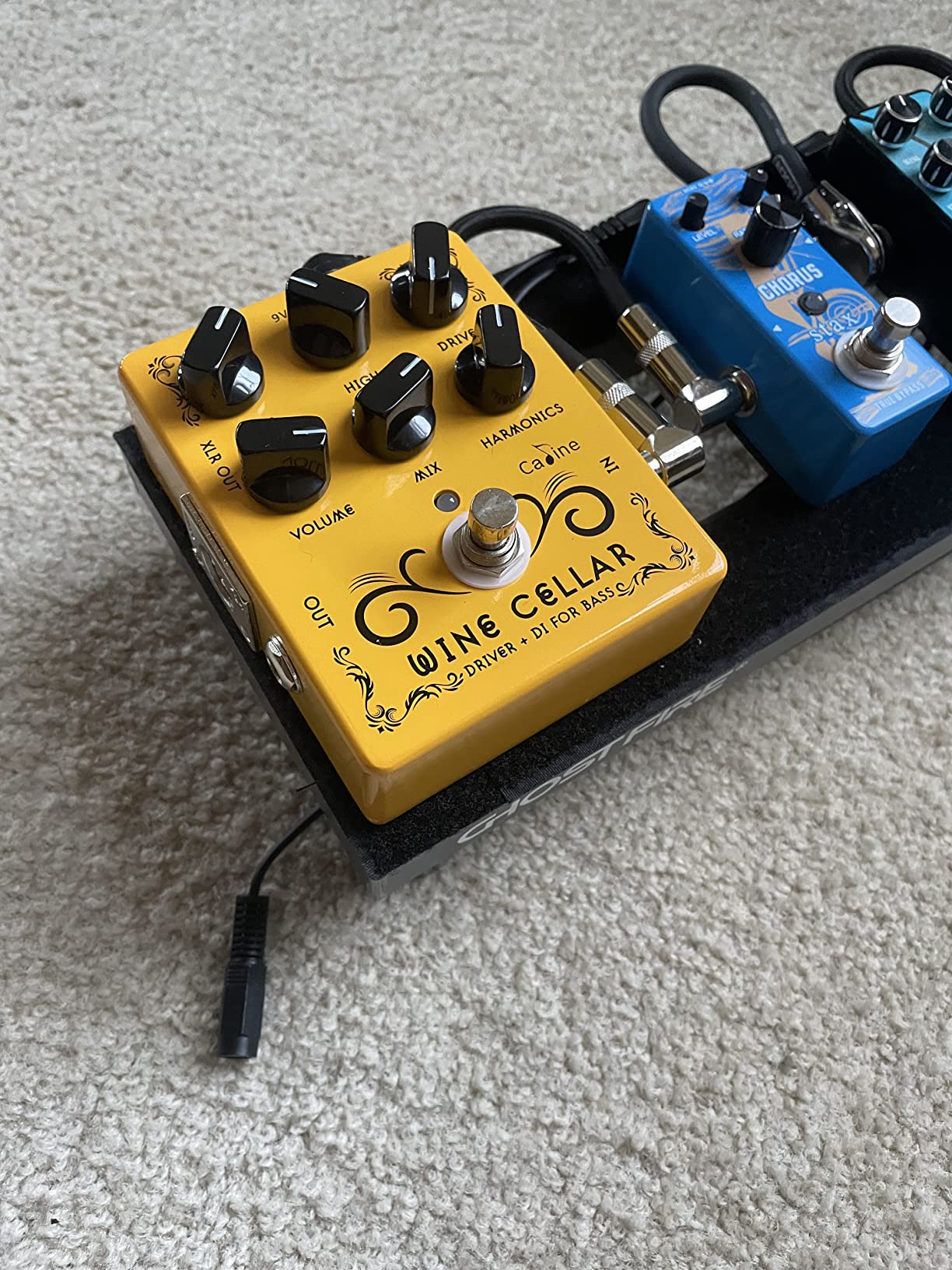
The six control knobs provide extensive tone-shaping capabilities. The drive control ranges from clean boost to mild breakup, while the high and low EQ controls offer +/- 15dB of cut or boost. The HF Harmonics control adds sparkle and definition, and the mix knob lets you blend between clean and driven signals.
What really sets this apart is the cabinet emulation circuitry. When engaged, it simulates the sound of a miked bass cabinet, eliminating the need for an actual amp in many situations. I’ve used it direct for recording and was impressed with how natural it sounded.
The true bypass design ensures your tone remains unaffected when the pedal is off. The aluminum alloy construction feels solid, though the knobs are a bit close together. The only real drawbacks are the lower output volume (requiring higher knob settings) and the abrupt nature of the drive control.
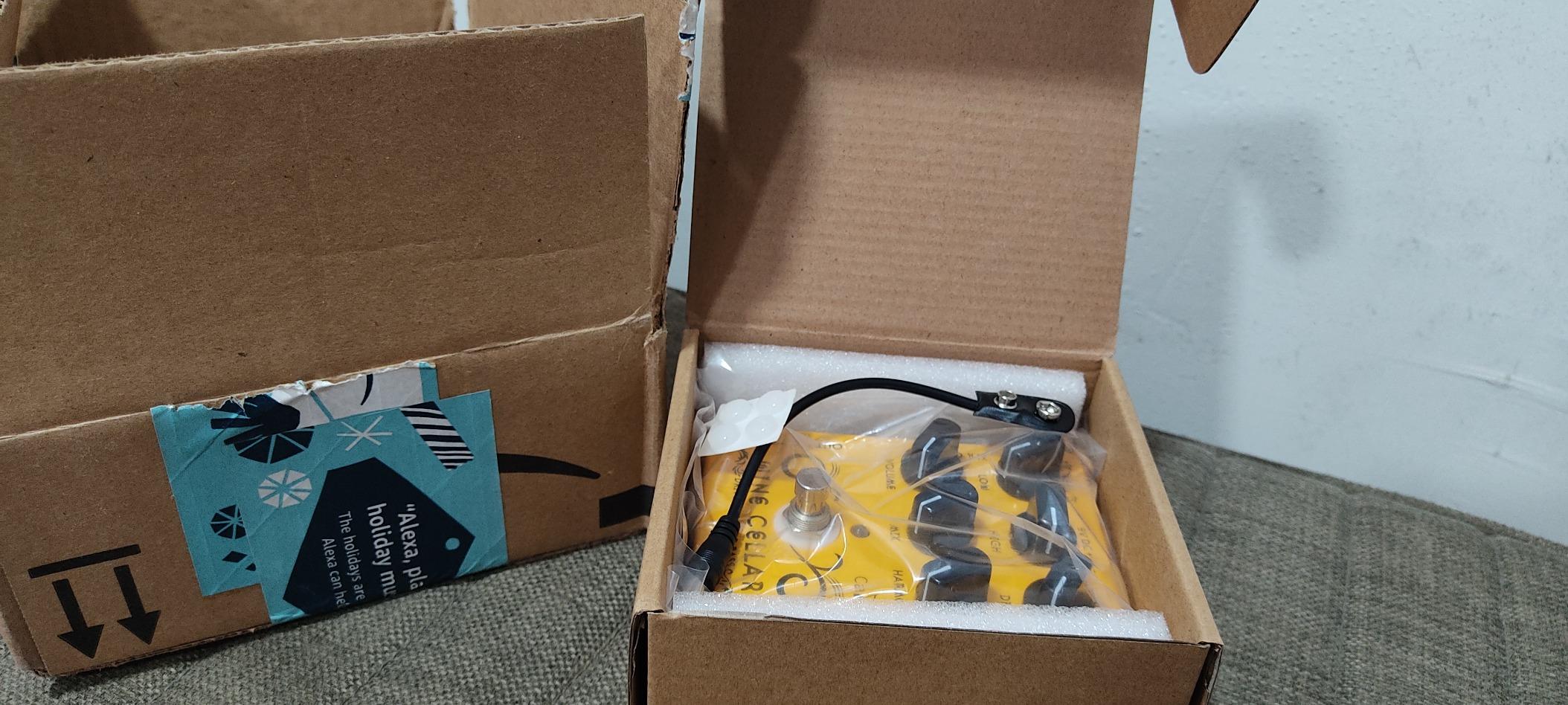
What Users Love: Incredible value for money, versatile tone shaping, cabinet emulation, true bypass design, and solid aluminum construction.
Common Concerns: Lower output volume requires higher settings, drive control can be abrupt, and no manual included with purchase.
12. Dunlop 105Q Bass Wah – Best Dedicated Bass Wah Pedal
- Optimized for bass
- Auto-return design
- Well-built and durable
- Classic wah sounds
- Maintains low end
- Expensive
- No power supply included
- Some prefer traditional activation
- Made in USA
Type: Auto-return wah
Design: Bass-specific
Features: Custom EQ, Volume/Q controls
Power: 9V or battery
Construction: Metal
The Dunlop 105Q Cry Baby Bass Wah is the first wah pedal specifically designed for bass guitar. Unlike standard wah pedals that can thin out your low end, the 105Q uses a custom potentiometer and EQ circuit to preserve your fundamental frequencies while adding expressive wah effects to the mids and highs.
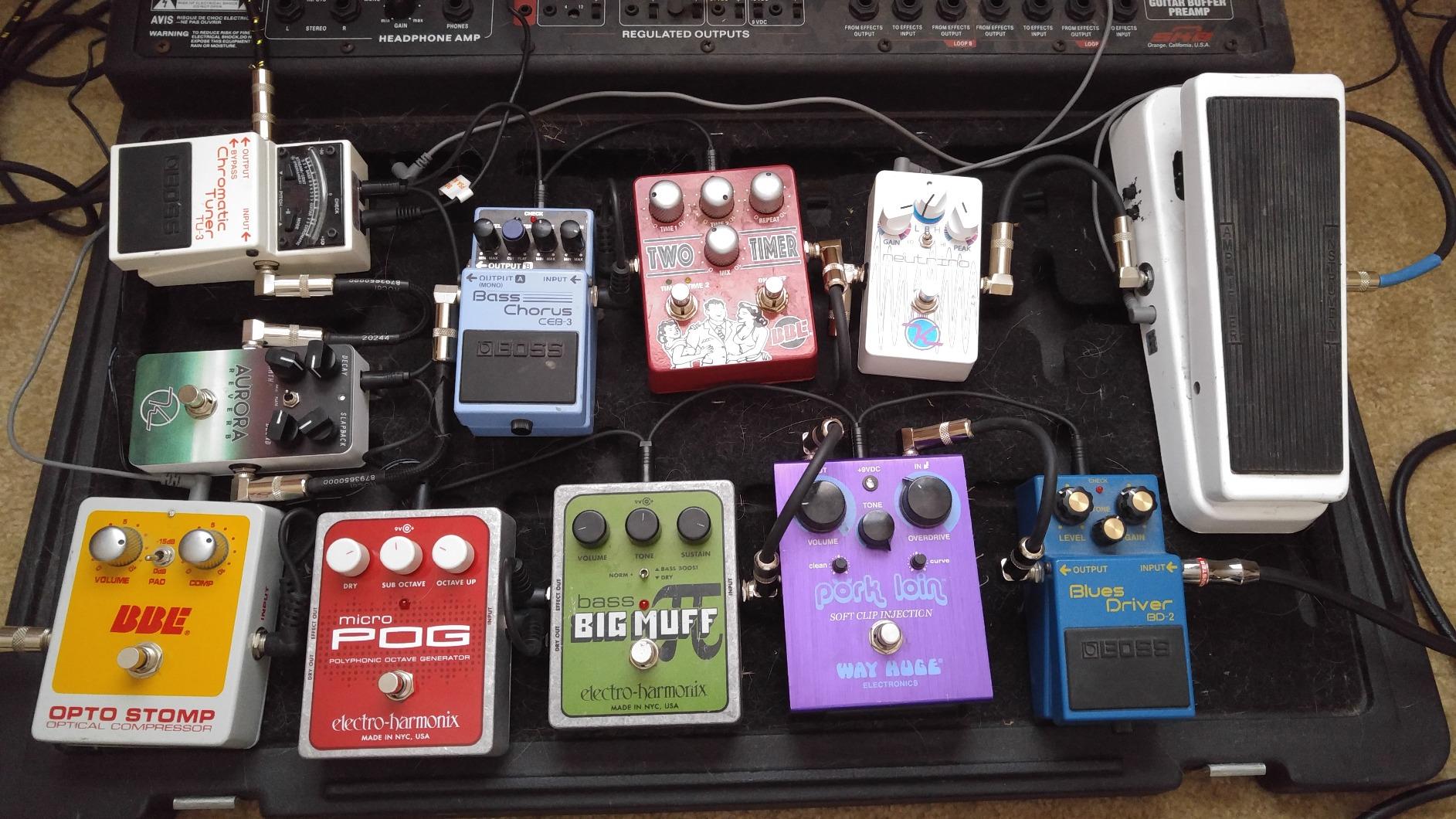
The auto-return design is brilliant for bass players. Instead of a traditional on/off switch, the effect engages as soon as you move the pedal, returning to bypass when you release it. This allows for quick, expressive wah effects without needing to tap dance on a separate switch.
The volume and Q controls let you shape the wah character to your taste. I found the Q control particularly useful for dialing in the perfect amount of resonance – from subtle vocal tones to quacky funk sounds. The construction is tank-like, as you’d expect from a pedal made in the USA.
While it’s expensive compared to some alternatives, the bass-specific optimization justifies the cost for serious players. The wah sounds are classic and musical, working well for funk, rock, and experimental music. Just remember to factor in the cost of a quality power supply or 9V battery.
What Users Love: Specifically designed for bass frequencies, auto-return engagement, excellent build quality, classic wah sounds, and low-end preservation.
Common Concerns: Higher price point, power supply not included, and some players prefer traditional on/off switching.
How to Choose the Right Bass Pedals in 2026?
Choosing bass pedals requires understanding your needs, budget, and musical goals. After helping dozens of bassists build their pedalboards, I’ve developed a framework that makes the process much clearer.
Start with Your Musical Style
Different genres require different effects. If you play funk and soul, you’ll want a good envelope filter or wah pedal. Rock and metal players need quality overdrive and distortion. Jazz and fusion musicians benefit from compression and subtle modulation. Consider the music you actually play, not what you wish you played – there’s no point buying a synth pedal if you only play country music.
Build Your Foundation First
Every bassist should start with these essentials: a tuner (non-negotiable), compressor (for consistent dynamics), and overdrive (for when you need to cut through). These three pedals cover 90% of what most bass players need. I’ve seen players with 15+ pedals who can’t get a good basic tone because they skipped these fundamentals.
Consider Your Signal Chain
The order of your pedals dramatically affects your tone. A typical signal chain looks like: Tuner → Compressor → Filters/Wah → Overdrive/Distortion → Modulation → Pitch/Time → Volume. However, rules are made to be broken. Try putting your compressor after distortion for a different character, or experiment with modulation before drive for unique textures.
Power Supply Considerations
Don’t overlook power! Cheap power supplies introduce noise that can ruin your tone. Look for isolated power supplies if you’re running more than 5-7 pedals. Calculate your total power needs – most digital pedals need 200-300mA, while analog pedals typically use 20-100mA. I learned this the hard way when my entire board went silent during a gig due to insufficient power.
Budget vs. Investment
Budget pedals like JOYO and Caline offer incredible value and can sound great, but premium pedals from BOSS and Electro-Harmonix offer better build quality and reliability. For casual players and beginners, start with budget options. For working musicians, investing in durable pedals saves money in the long run. I have budget pedals from 10 years ago that still work, but I also have cheap ones that failed within months.
Multi-Effects vs. Individual Pedals
Multi-effects units like the Zoom B1X Four offer tremendous value and variety, perfect for beginners, practice, and cover bands. Individual pedals provide better sound quality and reliability for professional use. Many professionals use a hybrid approach – a multi-effects for practice and writing, plus key individual pedals for their main rig.
Future-Proofing Your Setup
Think about where you want your playing to go. If you’re just starting, a versatile multi-effects unit lets you experiment with different effects before buying individual pedals. If you’re building a professional rig, focus on quality over quantity – 4-5 great pedals are better than 10 mediocre ones.
✅ Pro Tip: Always try pedals with your own bass and amp if possible. What sounds amazing in a demo video might not work with your specific instrument and playing style. Your bass’s pickups and your playing technique dramatically affect how pedals respond.
Space and Portability
Consider where and how you’ll use your pedals. If you’re playing small clubs and loading your own gear, a compact, lightweight setup is crucial. Studio players can focus purely on tone without worrying about size. The rise of ultra-compact pedals like the Zoom MS-60B+ and Line 6 POD Express means you can get professional sounds in packages small enough to fit in a gig bag pocket.
Frequently Asked Questions
Do bass players need different pedals than guitar players?
Yes, bass pedals are specifically designed to preserve low frequencies while adding effects. Guitar pedals can thin out your bass tone and may not track the lower frequencies properly. Bass-specific pedals like the BOSS CEB-3 chorus or Dunlop 105Q wah are optimized for bass guitar’s frequency range.
What’s the difference between overdrive, distortion, and fuzz for bass?
Overdrive adds mild warmth and breakup, distortion provides more aggressive gain, and fuzz creates extreme, saturated tones. For bass, overdrive like the JOYO Double Thruster works well for rock, while fuzz like the EHX Bass Big Muff excels at heavy, distorted tones. Each has its place depending on your musical style.
How many pedals do I really need as a bass player?
Most bass players need 3-5 pedals maximum. Start with the essentials: tuner, compressor, and overdrive. Add modulation or effects pedals based on your musical needs. Quality matters more than quantity – a few great pedals will serve you better than many mediocre ones.
Can I use guitar pedals with my bass?
Some guitar pedals work well with bass, particularly tuners, delays, and some overdrives. However, many guitar pedals aren’t designed to handle bass frequencies and can sound thin or muddy. Always test guitar pedals with your bass before buying, and look for bass-specific versions when available.
What’s the best order for bass pedals on a pedalboard?
The standard order is: Tuner → Compressor → Wah/Envelope Filter → Overdrive/Distortion → Modulation (chorus, phaser) → Pitch/Octave → Volume/Expression. However, feel free to experiment – putting modulation before drive can create unique textures, and some players prefer compression at the end of the chain.
Are multi-effects pedals worth it for bass?
Multi-effects pedals like the Zoom B1X Four offer incredible value, especially for beginners and players who need variety. They provide access to numerous effects for the price of one or two individual pedals. While they may not match the quality of high-end individual pedals, modern multi-effects units sound excellent and are perfect for practice, writing, and many live situations.
Final Recommendations
After testing all these pedals extensively, I’m confident in recommending the Zoom B1X Four as the best overall choice for most bass players. It offers incredible value, professional sound quality, and versatility that rivals pedals costing much more. Whether you’re just starting out or looking to simplify your setup, the B1X Four delivers.
For players who want professional-grade tones in a compact package, the Line 6 POD Express Bass is my top premium pick. The HX-quality models and ultra-portable design make it perfect for gigging musicians who need great tones without the back-breaking weight.
Budget-conscious players should look at the JOYO Double Thruster for high-gain tones or the LEKATO Cube Baby for multi-effects versatility. Both offer impressive performance at prices that won’t break the bank.
Remember that tone is personal – what works for me might not work for you. Use these recommendations as starting points, but always trust your ears. The best bass pedal is the one that inspires you to play more and helps you create the music in your head.
Leave a Reply