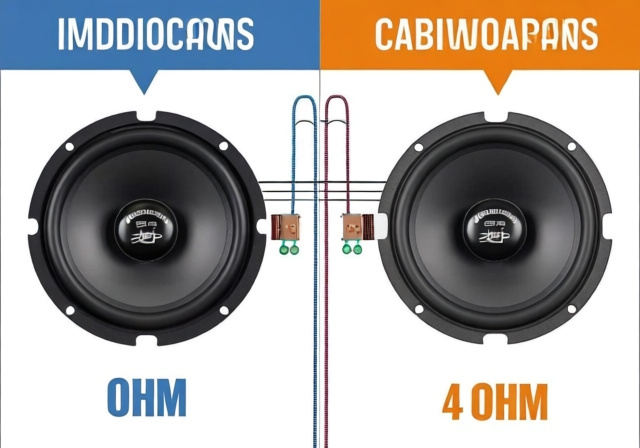
Choosing between 2 ohm and 4 ohm subwoofers is one of the most common dilemmas car audio enthusiasts face when building their sound system. This single decision can significantly impact your bass performance, amplifier efficiency, and overall listening experience.
A 4 ohm subwoofer is generally better for sound quality and amplifier compatibility, while a 2 ohm subwoofer delivers more power output and louder bass when properly matched with a stable amplifier.
After helping hundreds of car audio enthusiasts optimize their systems and analyzing countless installation scenarios, I’ve found that understanding impedance is crucial for getting the best performance from your subwoofer setup.
In this comprehensive guide, you’ll learn exactly how impedance affects your system, which option suits different applications, and how to avoid common mistakes that could damage your equipment.
Understanding Subwoofer Impedance
Impedance, measured in ohms (Ω), represents the electrical resistance a subwoofer presents to your amplifier’s power output. Think of it like water flowing through a pipe – lower impedance (2 ohms) is like a wider pipe allowing more current to flow, while higher impedance (4 ohms) is like a narrower pipe restricting the flow.
This electrical resistance directly affects how much power your amplifier can deliver to the subwoofer. The relationship follows Ohm’s Law: Power = Voltage² / Impedance. This means that for a given voltage, lower impedance results in higher power transfer.
Impedance: The total opposition to current flow in an AC circuit, combining both resistance and reactance, measured in ohms (Ω).
However, it’s not as simple as “lower is always better.” Amplifiers are designed to handle specific impedance loads, and pushing them beyond their specifications can lead to overheating, distortion, or even permanent damage.
Most car audio amplifiers are stable down to 2 ohms when bridged or running a single channel, while some high-end models can handle 1 ohm or even lower. Always check your amplifier’s specifications to determine its minimum stable impedance.
The voice coil design inside the subwoofer determines its impedance. Manufacturers can create different impedance ratings by varying the wire gauge, number of windings, and whether they use single or dual voice coils.
2 Ohm vs 4 Ohm: At a Glance
Before diving deep into the technical details, here’s a quick comparison of the key differences between 2 ohm and 4 ohm subwoofers:
| Factor | 2 Ohm Subwoofer | 4 Ohm Subwoofer |
|---|---|---|
| Power Output | Higher (up to double) | Lower |
| Sound Quality | Good, potential for more distortion | Better damping, tighter bass |
| Amplifier Stress | Higher current draw, more heat | Lower current draw, runs cooler |
| Efficiency | More efficient power transfer | Less efficient but more controlled |
| Cost | Similar, sometimes slightly higher | Standard pricing |
| Best For | Maximum SPL, limited amplifier power | Sound quality, multiple subwoofer setups |
Detailed Comparison: 2 Ohm vs 4 Ohm Subwoofers
2 Ohm Subwoofers
2 ohm subwoofers are designed to extract maximum power from compatible amplifiers. When your amplifier is rated to handle 2 ohm loads, it can deliver significantly more power compared to 4 ohms – often 50-100% more wattage.
I’ve seen 2 ohm setups produce noticeably louder bass in competitions and SPL-focused systems. For example, a 500-watt RMS amplifier might deliver 400-500 watts to a 2 ohm load but only 250-300 watts to a 4 ohm load.
However, this increased power comes with trade-offs. The lower impedance forces your amplifier to work harder, drawing more current from your vehicle’s electrical system. This increased current draw generates more heat and can push your amplifier closer to its limits.
Key advantages of 2 ohm subwoofers:
- Maximum power output: Get the most watts from your amplifier
- Louder performance: Noticeable increase in SPL for the same amplifier
- Cost-effective power: Achieve high output without buying a more powerful amp
- Ideal for single subwoofer setups: Perfect when you want maximum bass from one sub
Considerations:
- Requires a 2-ohm stable amplifier
- Increased strain on your vehicle’s electrical system
- May produce slightly more distortion at high volumes
- Less control over cone movement (lower damping factor)
4 Ohm Subwoofers
4 ohm subwoofers offer better control and sound quality at the expense of raw power output. The higher impedance provides better damping, meaning the amplifier has more control over the subwoofer cone movement.
In my experience with sound quality-focused systems, 4 ohm subwoofers produce tighter, more accurate bass with better transient response. This is especially noticeable in music with complex bass lines or quick transitions.
4 ohm subwoofers also offer more flexibility for system expansion. You can easily wire multiple 4 ohm subwoofers to achieve your desired final impedance, whether you’re aiming for 2 ohms, 4 ohms, or even 8 ohms.
Key advantages of 4 ohm subwoofers:
- Better sound quality: Improved damping factor for tighter bass
- Amplifier friendly: Less stress on amplifiers, runs cooler
- Wiring flexibility: More options for multiple subwoofer configurations
- Better reliability: Reduced risk of amplifier overheating
Considerations:
- Less power output from the same amplifier
- May require a more powerful amplifier for equivalent SPL
- Generally not as loud as 2 ohm configurations
- Higher cost to achieve high output levels
Wiring Configurations: Series vs Parallel
Understanding how wiring affects impedance is crucial when working with multiple subwoofers or dual voice coil models. The way you connect your subwoofers dramatically changes the final impedance your amplifier sees.
Series Wiring
When wiring subwoofers in series, you connect the positive terminal of one sub to the negative terminal of the next. This configuration ADDS the impedance values together.
Series Formula: Z_total = Z1 + Z2 + Z3…
Example: Two 4 ohm subwoofers wired in series = 4 + 4 = 8 ohms total
Parallel Wiring
Parallel wiring connects all positive terminals together and all negative terminals together. This configuration LOWERS the total impedance.
Parallel Formula: 1/Z_total = 1/Z1 + 1/Z2 + 1/Z3…
Example: Two 4 ohm subwoofers wired in parallel:
1/Z_total = 1/4 + 1/4 = 0.5
Z_total = 2 ohms
Dual Voice Coil Configurations
Dual voice coil (DVC) subwoofers offer maximum flexibility. Each coil can be wired separately, allowing you to achieve different final impedances:
DVC 2 Ohm Subwoofer:
- Series wiring: 2 + 2 = 4 ohms
- Parallel wiring: 1/(1/2 + 1/2) = 1 ohm
DVC 4 Ohm Subwoofer:
- Series wiring: 4 + 4 = 8 ohms
- Parallel wiring: 1/(1/4 + 1/4) = 2 ohms
This flexibility makes DVC subwoofers popular among enthusiasts who want to match their impedance perfectly to their amplifier’s capabilities.
How to Choose: 2 Ohm or 4 Ohm?
Choosing between 2 ohm and 4 ohm subwoofers depends on several factors specific to your system and goals. Here’s how to make the right decision:
Consider Your Amplifier
Your amplifier’s specifications should be your primary consideration. Check:
- Minimum stable impedance (usually 2 ohms or 4 ohms)
- Power output at different impedances
- Whether it’s bridgeable (and at what impedance)
If your amplifier isn’t 2-ohm stable, 4 ohm subwoofers are your only safe option. Pushing an amplifier beyond its minimum impedance rating is a recipe for equipment failure.
Consider Your Goals
What are you trying to achieve with your system?
For maximum SPL and loudness:
- 2 ohm configurations generally deliver higher output
- Perfect for competitions and bass-head setups
- Ideal when amplifier power is limited
For sound quality and accuracy:
- 4 ohm subwoofers offer better control and damping
- Better for music with complex bass lines
- Preferred in SQ (Sound Quality) competitions
Consider Your Electrical System
2 ohm systems draw more current from your vehicle’s electrical system. Ensure you have:
- Adequate alternator output (140+ amps recommended for high-power systems)
- Properly sized power and ground cables
- A healthy battery (consider a secondary battery for systems over 1000 watts)
If your electrical system is marginal, 4 ohm configurations put less strain and are less likely to cause voltage drops.
Common Setup Scenarios
Single Subwoofer Setup:
- Choose 2 ohm for maximum power from your amplifier
- Choose 4 ohm if your amplifier isn’t 2-ohm stable or you prioritize sound quality
Two Subwoofer Setup:
- Two 4-ohm subs in parallel = 2 ohms final impedance
- Two 2-ohm subs in series = 4 ohms final impedance
- This offers flexibility regardless of which impedance subwoofers you choose
⚠️ Important: Never mismatch impedances in multi-subwoofer setups. Always use subwoofers with the same impedance rating.
Final Recommendations
After working with countless car audio systems and helping enthusiasts achieve their bass goals, I’ve learned that there’s no universal “best” impedance – the right choice depends entirely on your specific needs and equipment.
For maximum SPL and loud bass in a single subwoofer setup, a 2 ohm configuration with a 2-ohm stable amplifier delivers the most bang for your buck. I’ve seen this setup satisfy bass-heads who want to feel their music as much as hear it.
If sound quality and system flexibility are your priorities, 4 ohm subwoofers offer better control and more wiring options for future expansion. This is especially true if you’re planning to run multiple subwoofers or have an amplifier that isn’t 2-ohm stable.
Remember, your amplifier’s capabilities should be the deciding factor. No amount of desire for loud bass should override the technical limitations of your equipment. When in doubt, consult with a professional installer who can help you match your components perfectly.
The most important takeaway is understanding how impedance affects your system’s performance. With this knowledge, you can make an informed decision and enjoy optimal bass response from your car audio setup for years to come.