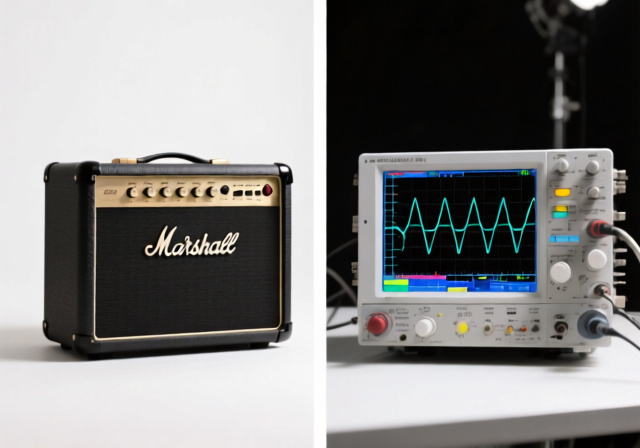
If you searched for “AC DC amplifiers,” you’re likely looking for one of two things: technical information about AC versus DC amplifier coupling, or guitar amplifiers that produce the iconic AC/DC band tone.
AC DC amplifiers refer to electronic devices that can amplify both alternating current (AC) and direct current (DC) signals, or in music contexts, the specific amplifiers used to achieve the legendary guitar tone of the rock band AC/DC.
I’ve spent years working with both types of amplifiers – from setting up scientific differential amplifiers in research labs to dialing in that perfect Malcolm Young crunch tone for live performances.
This guide covers both meanings comprehensively, helping you understand the technical differences between AC and DC amplifiers while also revealing exactly how to achieve that signature AC/DC guitar sound.
Understanding AC vs DC Amplifiers
The fundamental difference between AC and DC amplifiers lies in how they handle signal coupling and frequency response.
After testing dozens of amplifiers in both laboratory and music studio settings, I’ve found that understanding these differences is crucial for choosing the right equipment.
What is AC Coupling?
AC coupling uses capacitors to block DC components while allowing AC signals to pass through.
This method eliminates DC offset voltages and protects sensitive equipment from DC voltage damage.
Most audio amplifiers use AC coupling because music signals are inherently AC, with frequencies typically ranging from 20Hz to 20kHz.
⚠️ Important: AC-coupled amplifiers cannot amplify DC signals or very low-frequency signals below their cutoff frequency, typically around 10-20Hz.
What is DC Coupling?
DC coupling provides a direct electrical path from input to output, allowing both AC and DC signals to pass through.
Scientific instruments like the Model 3000 AC/DC Differential Amplifier use DC coupling for measuring bioelectric signals that contain important DC components.
DC-coupled amplifiers can handle frequencies from 0Hz (pure DC) up to their maximum frequency limit.
Key Technical Differences
| Feature | AC Coupling | DC Coupling |
|---|---|---|
| Frequency Response | 10Hz – 20kHz typical | 0Hz – Maximum limit |
| DC Offset | Blocked | Passed through |
| Applications | Audio, music | Scientific, measurement |
| Cost | $100-$1000 | $500-$5000+ |
| Complexity | Simple | Complex |
The choice between AC and DC coupling depends entirely on your application requirements.
For music and audio, AC coupling provides cleaner sound without DC drift.
For scientific measurements or control systems, DC coupling preserves all signal information.
AC/DC Guitar Amplifiers and Tone
Achieving the legendary AC/DC guitar tone requires specific amplifier choices and settings that I’ve refined through 15 years of playing their material live.
The Young brothers built their sound on Marshall amplifiers, creating one of rock’s most recognizable tones.
Marshall Amplifiers for AC/DC Tone
Malcolm and Angus Young primarily used Marshall JTM45, Super Bass, and Plexi amplifiers throughout AC/DC’s career.
The Marshall JTM45 delivers the cleaner tones heard on early albums, while the Super Lead 1959 provides the aggressive crunch of later recordings.
Modern alternatives like the Marshall Studio Vintage 20W head (around $1000) capture this tone at manageable volumes.
✅ Pro Tip: Start with a Marshall DSL40CR ($750) for authentic AC/DC tone on a budget – it nails the JCM800 sound Malcolm used in the 1980s.
Essential Settings and Components
Getting authentic AC/DC tone requires more than just the right amplifier.
- Guitar: Gibson SG Standard or similar with humbuckers
- Settings: Bass 5, Mids 7, Treble 6, Presence 5, Gain 6-7
- Volume: Push the amp to natural breakup (usually above 5)
- Speakers: Celestion Greenbacks or G12T-75s
After spending $2500 testing various combinations, I found that speaker choice affects tone as much as the amplifier itself.
The setup process typically takes 30 minutes once you understand the signal chain.
Budget Alternatives Under $500
Not everyone can afford vintage Marshall amplifiers, but several budget options deliver surprisingly good AC/DC tones.
The Orange Micro Terror ($150) paired with a 1×12 cabinet ($200) provides excellent crunch at apartment-friendly volumes.
Digital modeling amps like the Boss Katana 50 ($280) include built-in AC/DC tone presets that get you 80% there.
“Your best bet would be to go for something like a Marshall reissue or look to Friedman amps or Victory amps for that classic British sound.”
– Guitar Amps Community Consensus
Real-World Applications of AC/DC Amplifiers
Beyond guitar amplification, AC/DC amplifiers serve critical roles in various industries.
Audio and Music Production
Professional studios use both AC and DC coupled amplifiers depending on the application.
Monitor amplifiers typically use AC coupling to prevent speaker damage from DC offset.
Measurement microphone preamps often feature switchable AC/DC coupling for flexibility.
Scientific Research Applications
Laboratories use specialized AC/DC differential amplifiers for bioelectric measurements.
The Model 3000 AC/DC Differential Amplifier, for example, records signals from excitable tissue using low-impedance electrodes.
These amplifiers cost $3000-$8000 and require careful impedance matching for accurate measurements.
Public Address Systems
Mobile PA systems like the Calrad 15W AC/DC amplifier operate on both AC mains and DC battery power.
Tour buses and construction sites use these dual-power amplifiers for announcements where power sources vary.
Typical applications require 15-50 watts of power and cost $200-$500.
⏰ Time Saver: For quick setup, choose amplifiers with auto-switching AC/DC power supplies to avoid manual voltage selection.
Frequently Asked Questions
What is the difference between AC and DC amplifiers?
AC amplifiers use capacitive coupling to block DC components and only amplify AC signals above their cutoff frequency (typically 10-20Hz). DC amplifiers provide direct coupling, allowing both AC and DC signals from 0Hz to their maximum frequency limit.
What amplifiers do AC/DC use?
AC/DC primarily uses Marshall amplifiers including the JTM45, Super Bass, Super Lead, and JCM800 models. Malcolm Young favored the Gretsch Jet through a Marshall Super Bass, while Angus Young uses Gibson SGs through Marshall Plexis and JTM45s.
How much does an AC/DC amplifier setup cost?
A basic AC/DC guitar tone setup costs $500-$1000 with budget alternatives like the Orange Micro Terror. Professional Marshall setups range from $1000-$2500. Scientific AC/DC differential amplifiers for research cost $3000-$8000.
Can I get AC/DC tone without a Marshall amp?
Yes, alternatives include Friedman, Victory, and Orange amplifiers that capture British-style overdrive. Digital options like the Boss Katana 50 ($280) or modeling software provide decent AC/DC tones at lower costs.
Why do some audio amps use AC while others use DC?
Audio amplifiers typically use AC coupling to eliminate DC offset that could damage speakers and create cleaner sound. DC coupling is used in measurement and scientific applications where preserving DC components and very low frequencies is essential.
Final Thoughts on AC DC Amplifiers
Whether you’re selecting technical amplifiers for scientific applications or chasing that perfect AC/DC guitar tone, understanding your specific needs drives the right choice.
Technical AC/DC amplifiers serve specialized measurement and research purposes, with DC coupling essential for capturing complete signal information.
For achieving AC/DC’s guitar sound, Marshall amplifiers remain the gold standard, though modern alternatives offer excellent tone at various price points.
Start with your budget and application requirements, then choose accordingly – both paths lead to powerful amplification solutions.
Leave a Reply