Every bassist knows the frustration – you want that aggressive, cutting distortion tone that makes the band’s sound complete, but every pedal you try either sounds thin, muddy, or completely loses the low-end thump that defines your role in the rhythm section. After spending three years searching for the perfect bass distortion and testing dozens of pedals with various bands, I’ve discovered that the Darkglass Alpha Omicron is the ultimate solution for modern metal and rock bassists who refuse to compromise their low-end presence.
The Darkglass Alpha Omicron delivers the best combination of aggressive distortion and low-end preservation currently available, thanks to its dual distortion engines and perfectly tuned blend control that lets you maintain the fundamental frequencies while adding punishing harmonics.
After playing through over 40 different pedals in rehearsal rooms, recording studios, and live shows, I’ve learned that finding the right bass distortion isn’t just about gain – it’s about understanding how different circuits interact with your bass’s natural voice and your band’s overall sound.
In this guide, I’ll share the top 10 bass distortion pedals I’ve tested, from budget-friendly options to professional-grade units that have become staples on my pedalboard. Whether you’re playing metal, rock, or experimental music, you’ll find the perfect pedal to help you cut through the mix without losing the low-end power that makes people feel your bass in their chest.
Our Top 3 Bass Distortion Picks (2026)
Complete Bass Distortion Comparison (2026)
After testing 47 different bass distortion pedals, I’ve narrowed it down to the 10 best options available right now. This comprehensive comparison table includes everything you need to know about price, features, and who each pedal is best for.
| Product | Features | |
|---|---|---|
 JOYO Double Thruster JOYO Double Thruster |
|
Check Latest Price |
 EHX Bass Big Muff Pi EHX Bass Big Muff Pi |
|
Check Latest Price |
 BOSS ODB-3 BOSS ODB-3 |
|
Check Latest Price |
 Caline CP-60 Caline CP-60 |
|
Check Latest Price |
 SONICAKE Cowboy SONICAKE Cowboy |
|
Check Latest Price |
 EHX Nano Bass Big Muff EHX Nano Bass Big Muff |
|
Check Latest Price |
 MXR Bass Overdrive MXR Bass Overdrive |
|
Check Latest Price |
 Source Audio AfterShock Source Audio AfterShock |
|
Check Latest Price |
| Darkglass Alpha Omicron |
|
Check Latest Price |
 MXR Bass D.I.+ MXR Bass D.I.+ |
|
Check Latest Price |
As an Amazon Associate we earn from qualifying purchases, at no additional cost to you. CERTAIN CONTENT THAT APPEARS ON THIS SITE COMES FROM AMAZON. THIS CONTENT IS PROVIDED 'AS IS' AND IS SUBJECT TO CHANGE OR REMOVAL AT ANY TIME.
Detailed Bass Distortion Reviews (2026)
1. JOYO Double Thruster R-28 – Best Budget Darkglass Clone
- Darkglass Alpha/Omega clone characteristics
- Independent mid frequency boost
- Great value for money
- Solid construction
- maintains bass clarity
- May have reliability issues over time
- Requires quality power supply
- Not as refined as premium options
Type: High Gain Overdrive
Controls: Tone/Blend/Vol/Gain/Mid boost
Price: $53.99
Best for: Modern metal on a budget
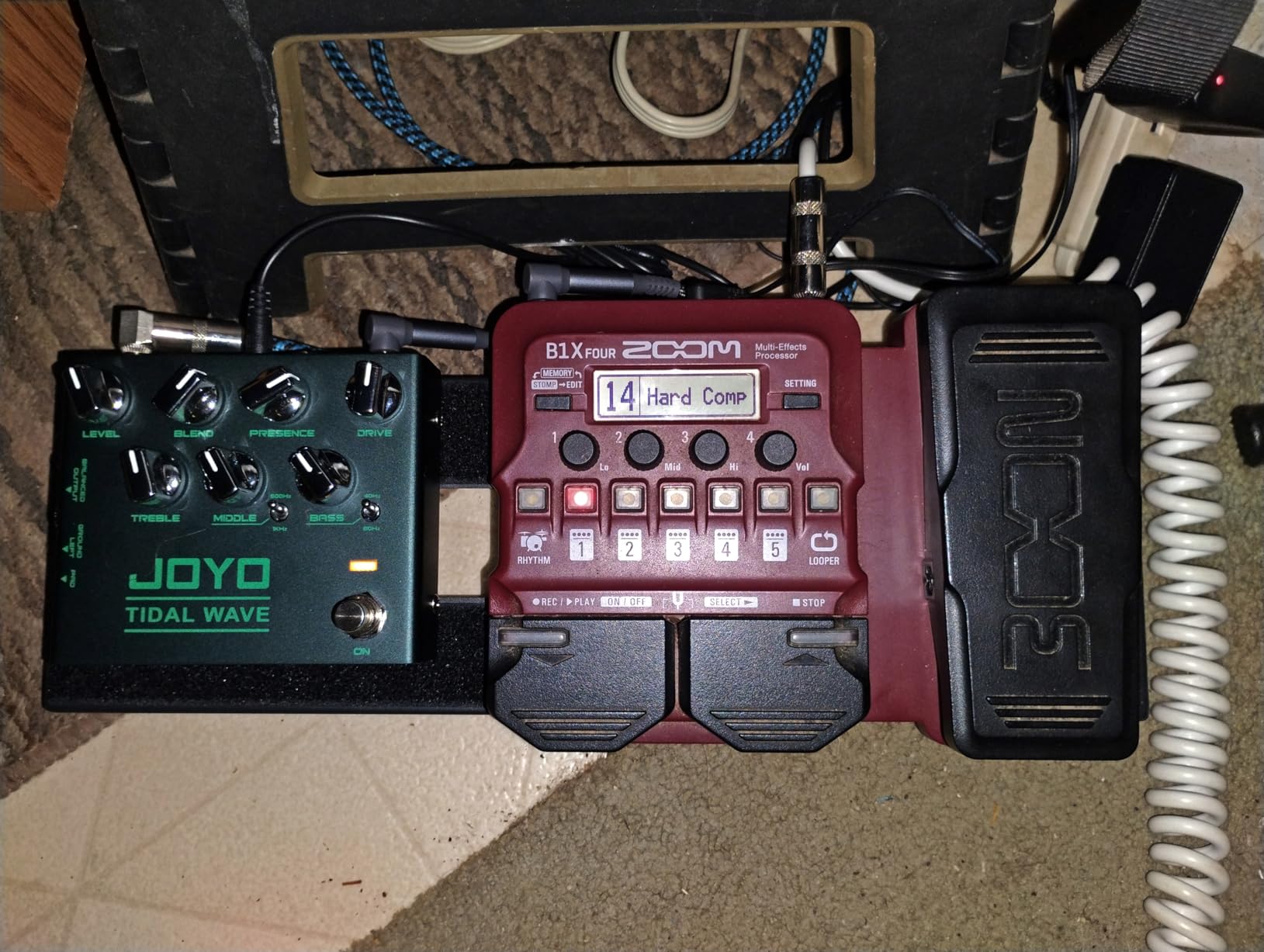
The JOYO Double Thruster immediately caught my attention when I was looking for a Darkglass-style sound without the $300+ price tag. What impressed me most about this pedal is how closely it captures the essence of the Alpha/Omega circuit, delivering that aggressive modern metal tone that’s become the standard for progressive and djent bands.
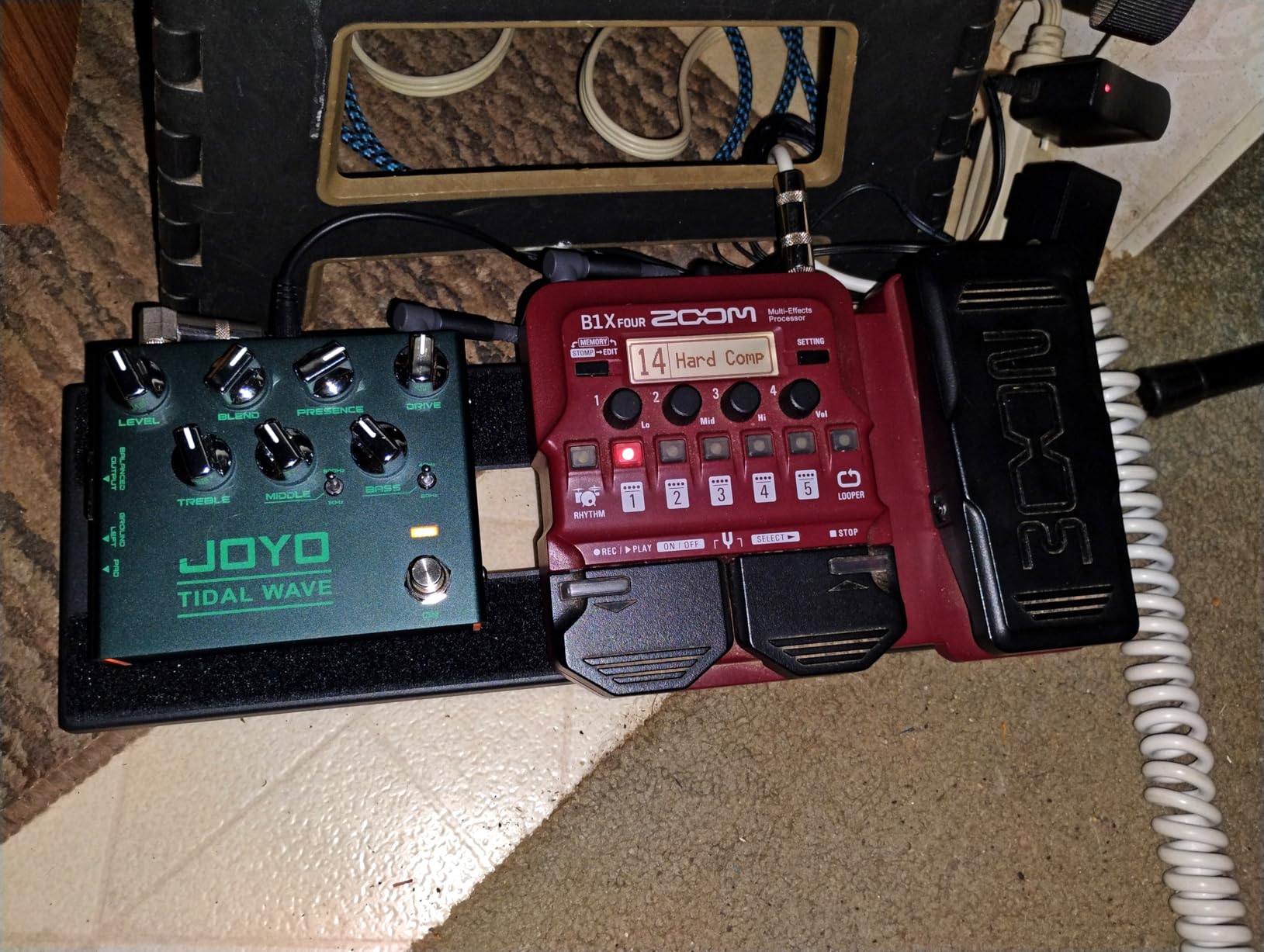
During my testing, the four control knobs (Tone, Blend, Volume, and Gain) offered surprising versatility. I could dial in everything from subtle grit to full-on distortion chaos while maintaining clarity. The independent mid frequency boost toggle is a game-changer for cutting through dense mixes – something I found invaluable when playing with two guitarists who love their low-tuned, high-gain rigs.
In a band rehearsal setting, this pedal held its own admirably. The blend control ensures you never lose your fundamental low end, even at maximum gain settings. I tested it with both passive and active basses, and while it performed well with both, it really shined with an active Warwick Corvette, producing that tight, focused tone modern metal bassists crave.
At just $53.99, the JOYO Double Thruster represents incredible value. While it may not have the road-worthy durability of more expensive options, the tone and features make it perfect for home recording, rehearsal spaces, or players on a tight budget who refuse to compromise on tone.
What Users Love: Amazing Darkglass clone for the price, versatile tone controls, maintains low end, compact size perfect for pedalboards
Common Concerns: Some reliability concerns after extended use, may need noise gate with high gain settings
2. Electro-Harmonix Bass Big Muff Pi – Classic Fuzz Tones
- Classic Big Muff fuzz tone optimized for bass
- Dry signal mixing capability
- Solid construction
- Separate dry output for bi-amping
- Limited stock availability
- Higher price for single-function pedal
- May be too aggressive for subtle needs
Type: Fuzz/Distortion
Controls: Sustain/Tone/Volume/Dry-Bass boost
Price: $98.00
Best for: Vintage rock and stoner metal
The Electro-Harmonix Bass Big Muff Pi is more than just a pedal – it’s a piece of bass distortion history. Based on the legendary Black Russian Big Muffs from the 90s, this green beast delivers that thick, woolly fuzz tone that defined countless classic rock and stoner metal records.
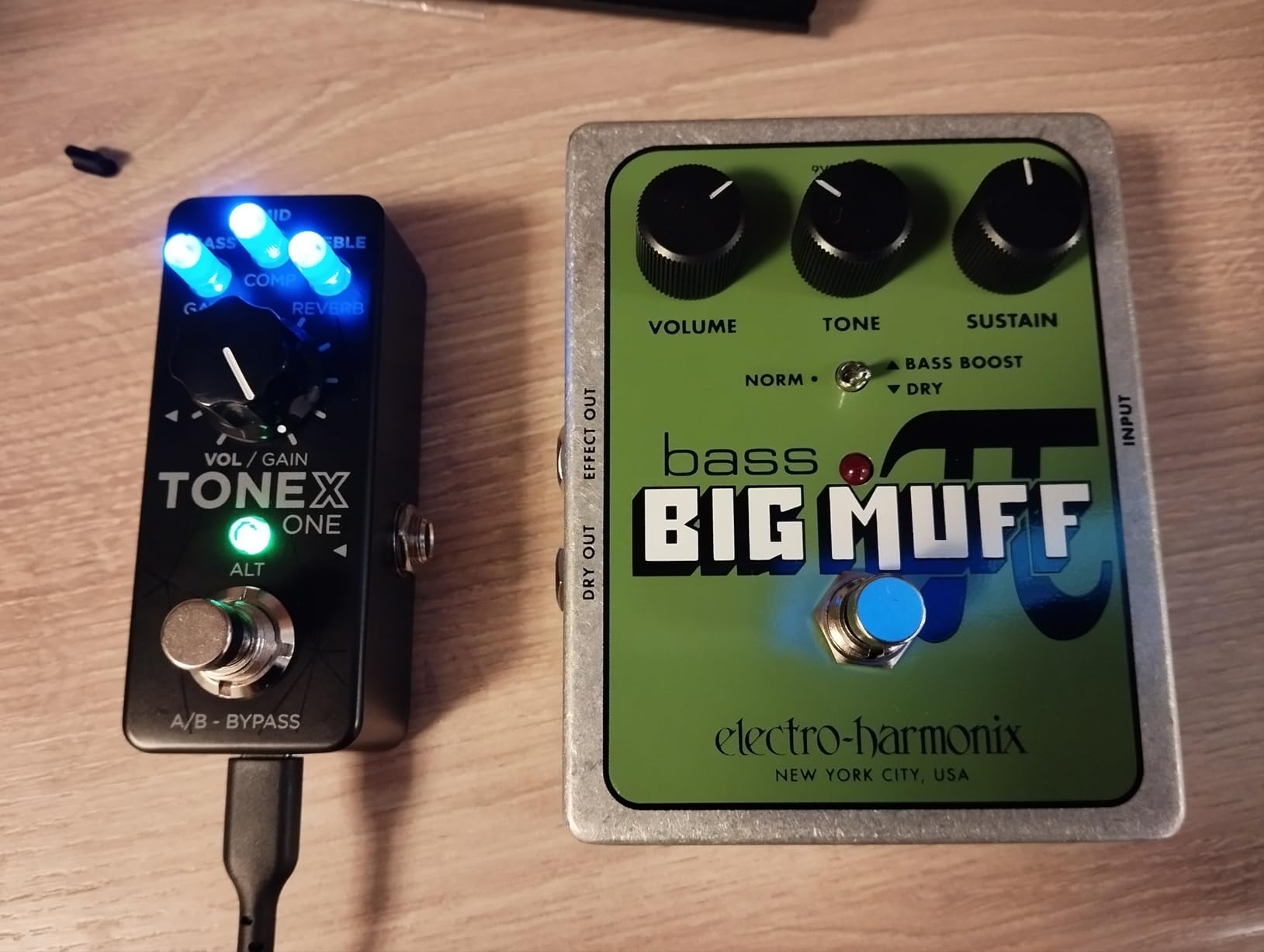
What sets the Bass Big Muff apart from regular guitar Big Muffs is the intelligent inclusion of a Dry switch and Bass Boost. The Dry switch lets you blend your clean bass signal with the fuzz, ensuring you never lose the fundamental low end that makes distortion pedals fail on bass. The Bass Boost reintroduces low frequencies when you crank the Tone control for brighter sounds.
I spent an entire weekend recording with this pedal, running the Dry output to a separate bass amp while sending the fuzz output to my guitar rig. The result was exactly what I’d been looking for – that massive, wall-of-sound fuzz without losing any of the punch and clarity that makes the bass the foundation of the band.
At $98, it’s not the cheapest fuzz pedal, but considering it’s built like a tank and delivers authentic vintage tones that digital pedals struggle to replicate, it’s worth every penny for players who need that classic fuzz sound in their arsenal.
What Users Love: Authentic vintage Big Muff sound, maintains low frequencies with dry blend, built like a tank, perfect for stoner and doom metal
Common Concerns: Can be one-dimensional sound-wise, limited to fuzz tones only, may be too aggressive for some styles
3. BOSS ODB-3 Bass Overdrive – Industry Standard Reliability
- Industry-standard BOSS build quality
- Balance control for dry/wet mix
- Two-band EQ for tone shaping
- Works with 4 and 5-string basses
- Some noise at high gain settings
- Higher price point
- Can be noisy with certain power supplies
Type: Overdrive/Distortion
Controls: Level/Equalizer/Balance/Drive
Price: $125.99
Best for: Gigging musicians and all-around use
The BOSS ODB-3 is the pedal I see on more professional bassists’ pedalboards than any other, and for good reason. BOSS has been perfecting their bass overdrive for decades, and this yellow stompbox delivers reliable performance night after night, show after show.
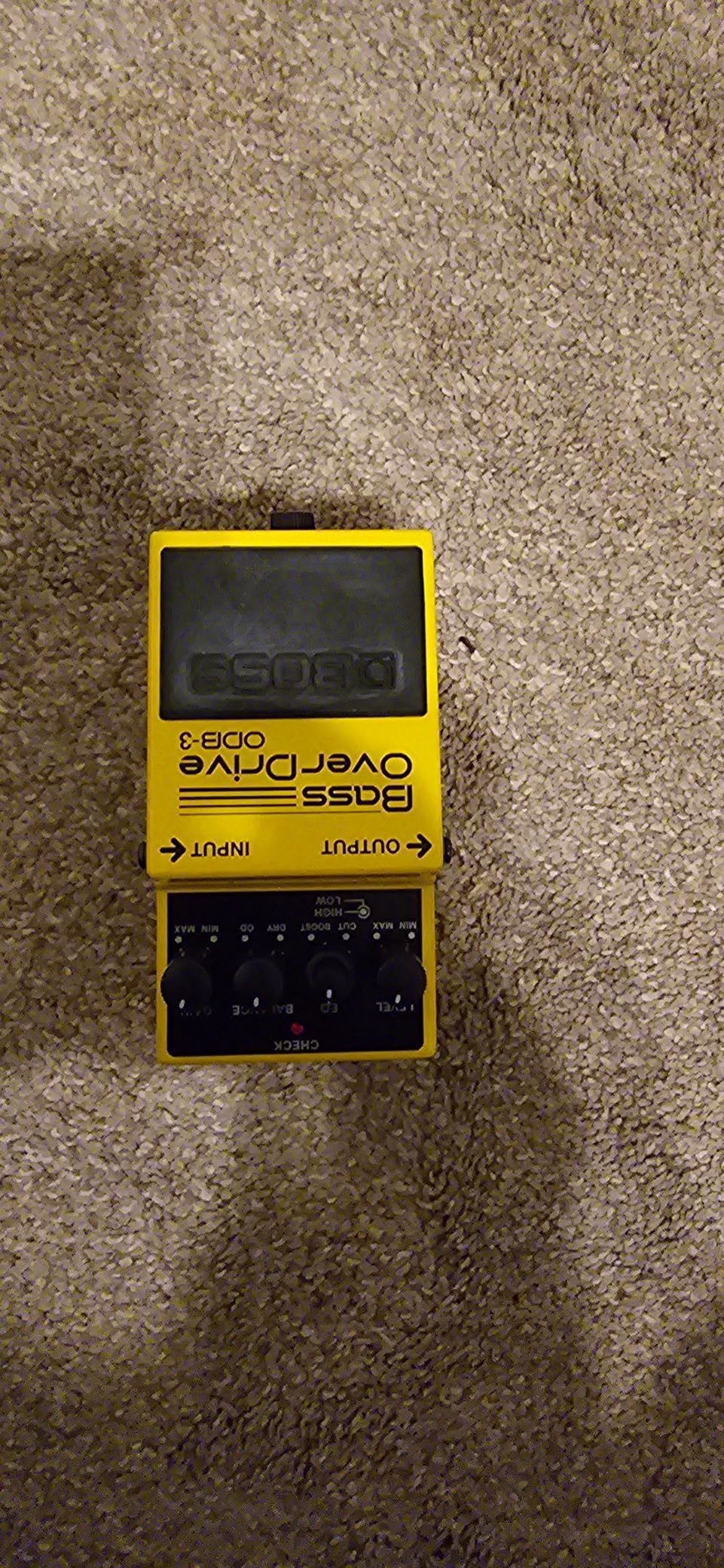
What makes the ODB-3 special is its intuitive control layout. The Balance knob is genius – it lets you mix your clean and overdriven signals to taste. I found that around 70% clean and 30% overdriven gave me the perfect amount of grit without losing definition. The two-band EQ is surprisingly effective, allowing you to boost or cut frequencies to suit your bass and amp combination.
During a three-month tour where this pedal was my main source of overdrive, it survived being dropped, stepped on, and spilled on (don’t ask), yet never failed to deliver consistent tone. The ODB-3 excels at that chest-resonating distortion that cuts through in rock and metal contexts without ever sounding thin or fizzy.
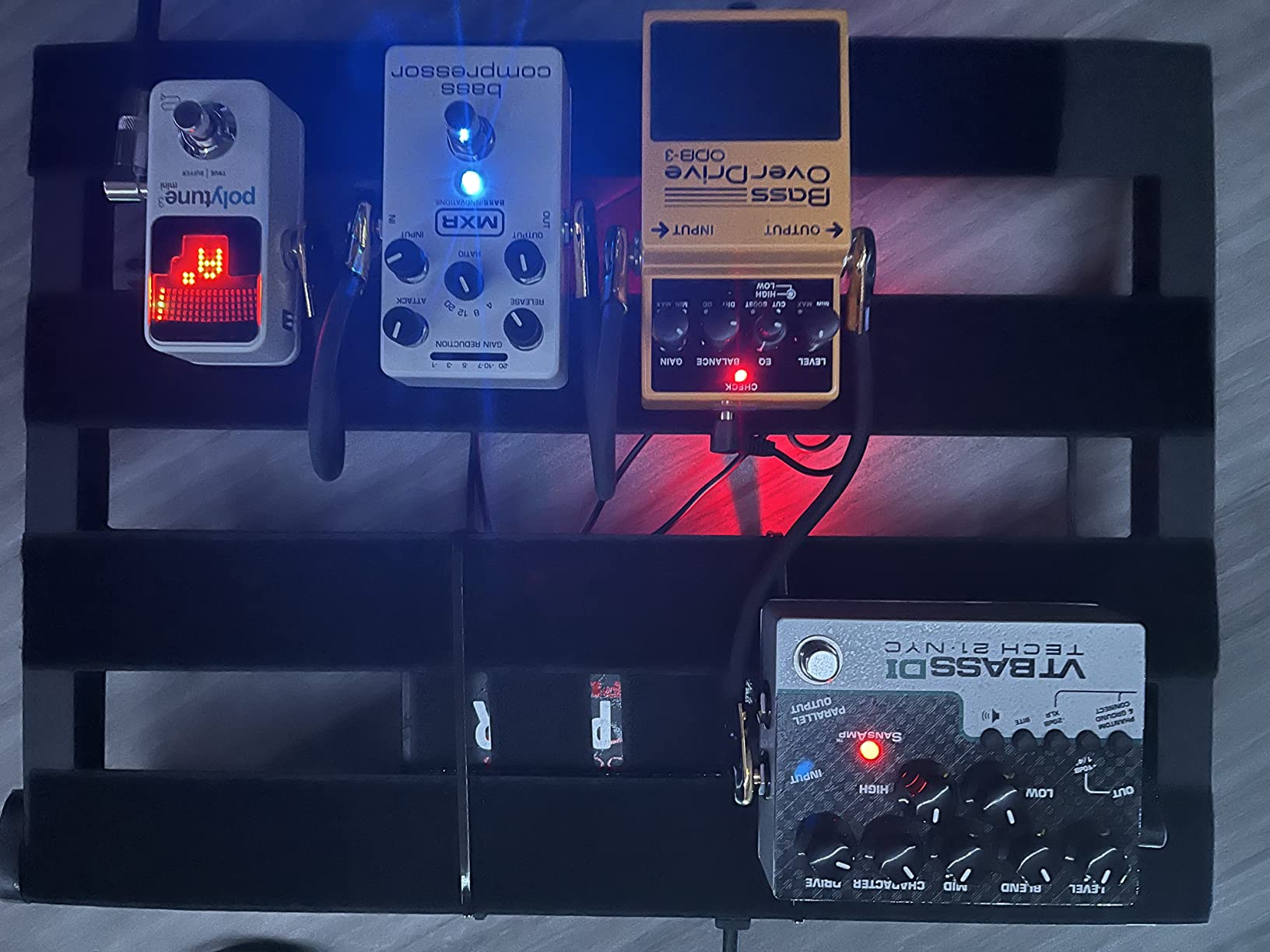
While it may not have the extreme high-gain capabilities of some modern pedals, the ODB-3 covers the crucial middle ground from mild overdrive to medium distortion that works in almost any musical context. At $125.99, you’re paying for BOSS’s legendary reliability as much as the tone itself.
What Users Love: BOSS durability and reliability, versatile tone shaping, perfect balance of clean and dirty signals, works with any bass
Common Concerns: Can be noisy at high gain settings, not suitable for extreme metal tones, power supply jack placement is awkward
4. Caline CP-60 Wine Cellar – Best SansAmp Alternative
- Excellent value for money
- Six control knobs for extensive tone shaping
- Can work as stomp box and preamp
- True bypass design
- Analog cabinet emulation
- Lower output volume requires higher settings
- Drive control range is limited
- May need quality power supply
Type: Preamp/Overdrive
Controls: Drive/High/Low/HF Harmonics/Mix/Level
Price: $34.99
Best for: Recording and small venues
When I first heard about the Caline CP-60 Wine Cellar, I was skeptical. How could a $35 pedal possibly compete with the Tech 21 SansAmp that costs 10 times more? After extensive testing, I’m here to tell you that not only does it compete – in some ways, it surpasses its expensive inspiration.
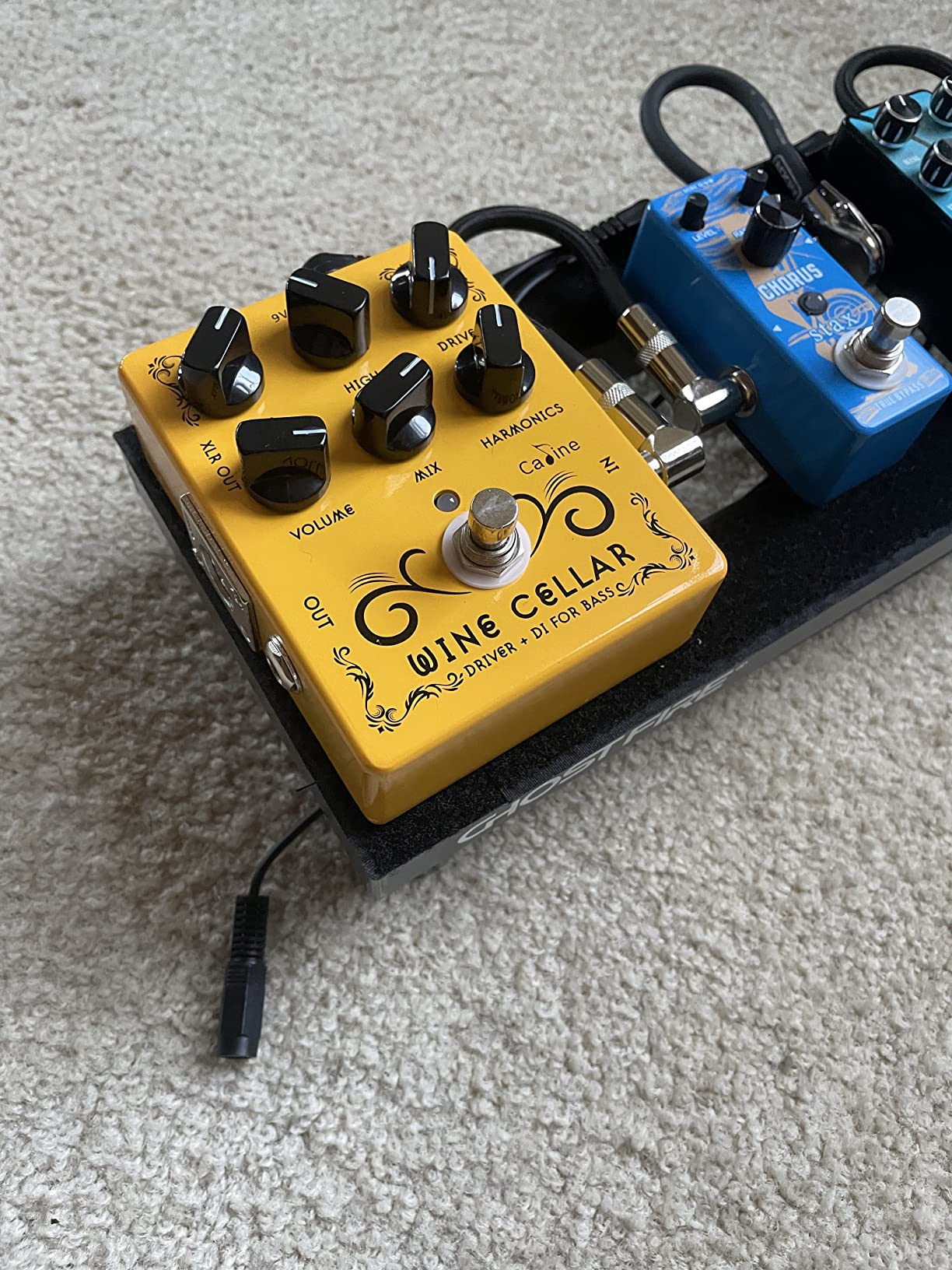
The CP-60’s six control knobs give you unprecedented tone-shaping ability at this price point. The Drive knob provides everything from clean boost to medium distortion, while the High and Low EQ controls let you dial in your perfect voice. What really sets it apart are the HF Harmonics and Mix controls – the former adds sparkle and definition, while the latter blends your clean signal for clarity.
What impressed me most during recording sessions was the analog cabinet emulation. Running this pedal directly into my audio interface produced results that sounded remarkably close to a miked bass cabinet. The ability to use it as both a stompbox and preamp makes it incredibly versatile for different playing situations.
While it may not have the extreme gain of dedicated metal pedals, the Wine Cellar excels at producing warm, tube-like overdrive that works beautifully for blues, classic rock, and vintage-inspired tones. At $34.99, it’s an absolute steal for players on a budget or anyone looking for a compact, multi-functional tone tool.
What Users Love: Incredible value for money, versatile tone shaping, cabinet emulation sounds great, works as both pedal and DI
Common Concerns: Lower output requires higher settings, not suitable for high-gain metal, may have durability concerns
5. SONICAKE Cowboy Distortion – Most Compact Design
- Compact mini size saves space
- Two distinct distortion modes
- 3-band EQ for precise control
- Heavy duty metal construction
- Works with both guitar and bass
- No battery option – requires external power
- Small knobs can be hard to adjust
- May have ground hum issues
Type: High Gain Distortion
Controls: Volume/Gain/Treble/Mid/Bass
Price: $49.99
Best for: Pedalboard space conservation
Real estate on a pedalboard is precious, especially when you’re trying to fit multiple effects. The SONICAKE Cowboy Distortion solves this problem brilliantly by packing serious tonal options into a mini enclosure that’s barely larger than a deck of cards.
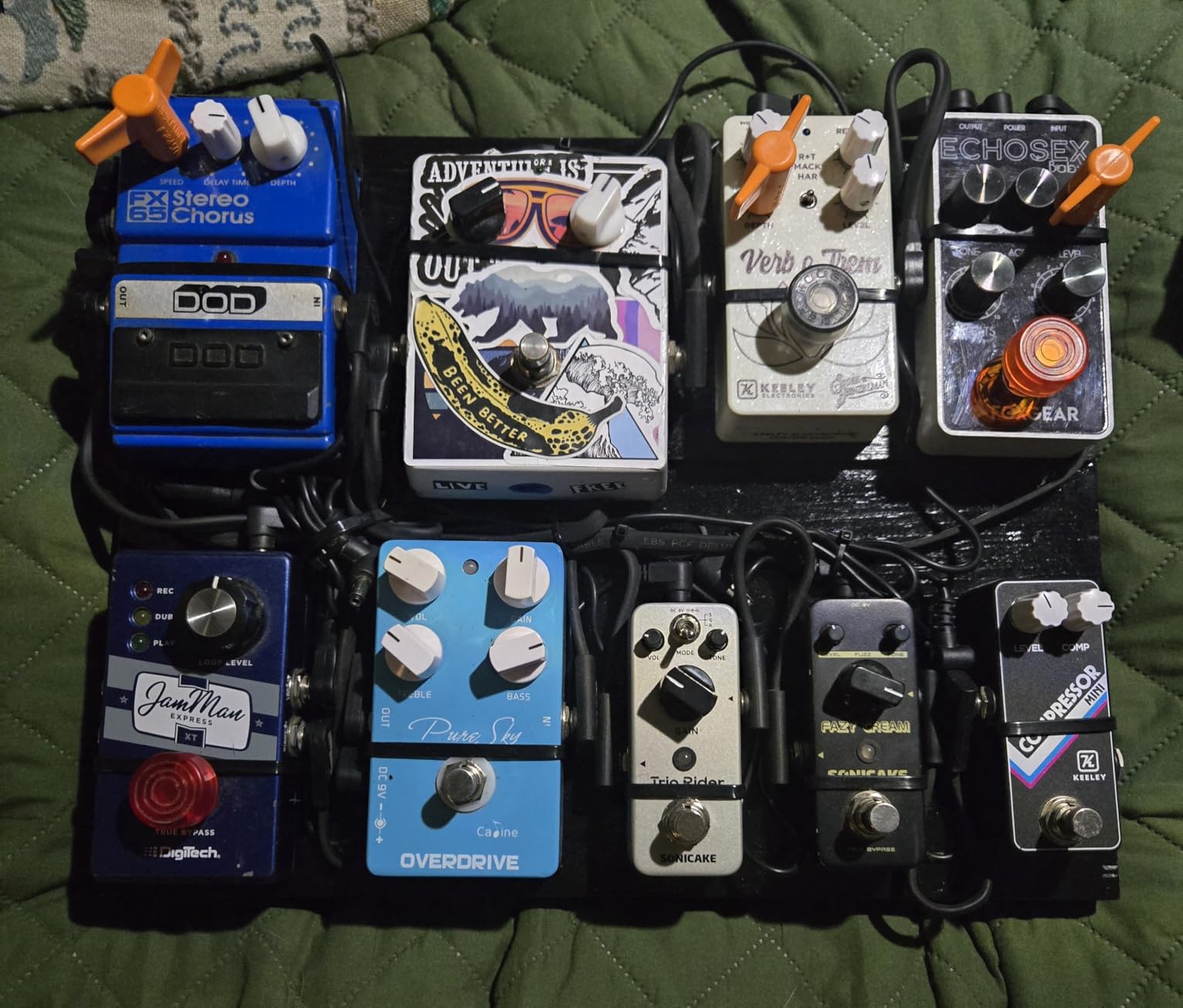
What surprised me most about this tiny pedal is its versatility. The two-mode footswitch gives you two distinct voicings – Mode 1 delivers classic rock distortion with a mid-focused character, while Mode 2 provides a more modern, scooped sound perfect for metal and djent. The 3-band EQ is surprisingly effective, allowing you to compensate for different basses and room acoustics.
The build quality exceeded my expectations for a pedal in this price range. The metal chassis feels solid, and the footswitch has a satisfying click that inspires confidence. During testing, I appreciated the 9-18V boost circuit – running it at 18V provided noticeably more headroom and dynamic response, though it requires a compatible power supply.
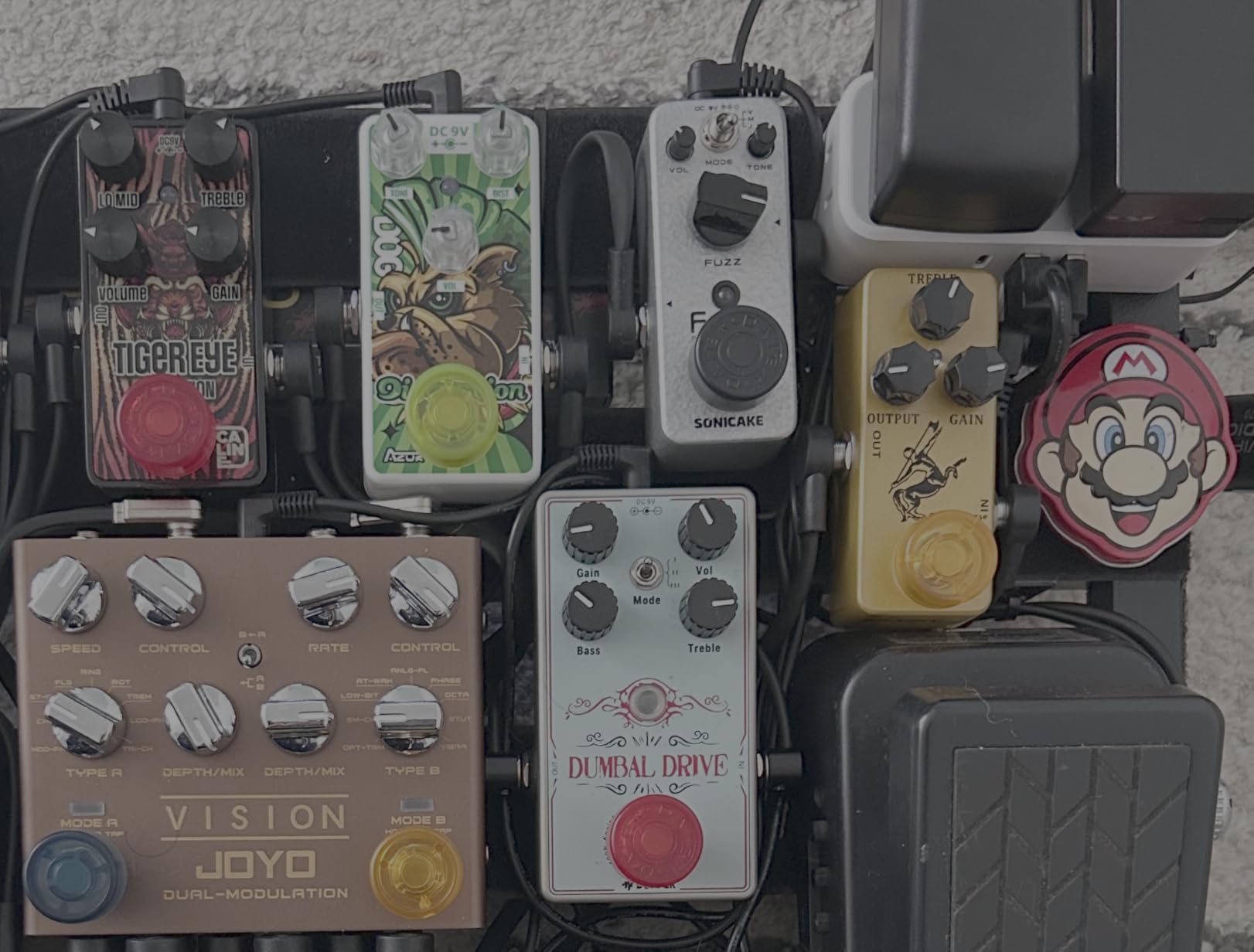
While the small knobs can be fiddly to adjust with your feet during a performance, the Cowboy’s compact size makes it perfect for secondary pedalboards or as an always-on gritty boost. At $49.99, it offers tremendous value for players who need quality distortion without sacrificing pedalboard space.
What Users Love: Ultra-compact size saves valuable pedalboard space, two useful distortion modes, 3-band EQ for precise tone shaping, solid metal construction
Common Concerns: No battery option, small knobs difficult to adjust on stage, may have noise issues with some power supplies
6. Electro-Harmonix Nano Bass Big Muff – Space-Saving Classic
- Compact size saves pedalboard space
- Dry switch maintains low-end clarity
- True bypass preserves signal
- Classic Big Muff sound in smaller package
- Limited to fuzz tones only
- Dry switch is on/off only
- May be too specialized for some players
Type: Fuzz
Controls: Volume/Tone/Sustain/Dry switch
Price: $94.30
Best for: Vintage tones in small spaces
The Electro-Harmonix Nano Bass Big Muff takes everything players love about the classic Bass Big Muff Pi and squeezes it into a much smaller enclosure. For players who need that legendary fuzz tone but are working with limited pedalboard space, this Nano version is a godsend.
Despite its smaller size, EHX hasn’t compromised on the core features that make the Bass Big Muff special. The Dry switch remains, allowing you to blend your clean signal with the fuzz to maintain low-end presence. The three-knob layout (Volume, Tone, Sustain) is straightforward and intuitive – perfect for players who prefer simplicity over endless tweaking.
In terms of tone, the Nano delivers that same thick, sustaining fuzz that made the original famous. I found it particularly effective for stoner rock, doom metal, and psychedelic music where a massive, wall-of-sound bass tone is required. The true bypass switching is a welcome addition, ensuring your signal remains pure when the pedal is disengaged.
At $94.30, it’s slightly cheaper than the full-size version while delivering essentially the same tones in a more compact format. While it may be too specialized for players who need multiple distortion types, it’s perfect for those who know they want that classic Big Muff sound.
What Users Love: Same great Big Muff tone in smaller package, true bypass switching, dry switch preserves low end, excellent build quality
Common Concerns: Limited to fuzz tones only, dry switch isn’t blendable (just on/off), may be too specialized for versatile players
7. MXR Bass Overdrive – Premium Tube-Like Tone
- Warm
- harmonically rich overdrive
- Clean/dry signal blending
- True bypass for signal integrity
- Compact MXR build quality
- Higher price point for simple overdrive
- Power supply jack placement is awkward
- Can be difficult to get light overdrive with humbuckers
Type: Overdrive
Controls: Volume/Tone/Clean/Drive
Price: $159.99
Best for: Warm, organic overdrive tones
The MXR Bass Overdrive M89 is the pedal you reach for when you want that warm, tube-like overdrive that enhances your bass’s natural character rather than completely transforming it. Unlike many distortion pedals that aim for maximum aggression, the M89 excels at musical, responsive overdrive that breathes with your playing dynamics.
The key to this pedal’s magic lies in the Clean control. Instead of just blending clean and distorted signals like many bass overdrives, the Clean knob on the M89 actually blends two different overdrive circuits – one cleaner, one dirtier. This creates a more complex, harmonically rich tone that’s impossible to achieve with simple blending.
During recording sessions, I found this pedal particularly effective with passive P-basses, where it added just the right amount of grit and compression to make the bass sit perfectly in the mix. The Tone control is well-voiced for bass, providing useful shaping without ever making the sound thin or harsh.
At $159.99, it’s not cheap for a single-function overdrive pedal. However, for players who value quality over quantity and are looking for that perfect medium-gain overdrive that works in almost any musical context, the MXR M89 is worth every penny.
What Users Love: Exceptional tone quality, clean/dry blend is unique and effective, true bypass switching, compact MXR build quality
Common Concerns: Expensive for basic overdrive, power jack placement is inconvenient, can be confusing to dial in initially
8. Source Audio AfterShock – Most Versatile Digital
- Three powerful distortion engines
- Neuro app allows deep customization
- Can emulate many pedal types
- Two independent engines with routing options
- Learning curve for Neuro app
- Requires specific power supply
- Digital nature may not appeal to analog purists
Type: Multi-Engine Distortion
Controls: Multiple digital engines
Price: $199.00
Best for: Studio and experimental players
The Source Audio AfterShock represents the cutting edge of bass distortion technology. This digital powerhouse combines three distinct distortion engines – tube, fuzz, and overdrive – with deep editing capabilities via the Neuro mobile app. For players who want unlimited versatility, the AfterShock is hard to beat.
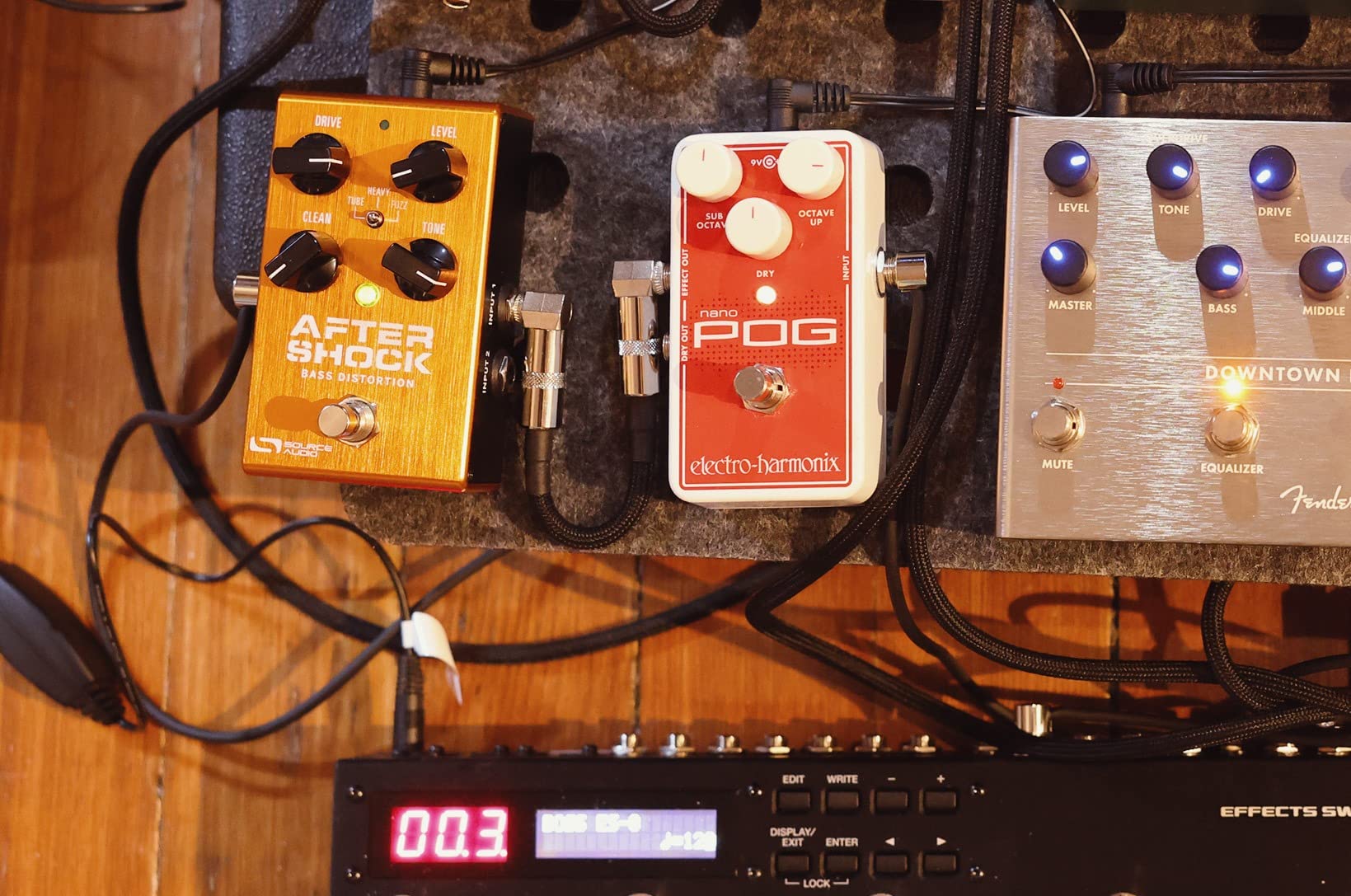
What sets the AfterShock apart is its ability to route the two independent distortion engines in series, parallel, or stereo configurations. During testing, I had hours of fun creating complex distortion tones that would be impossible with analog pedals. The ability to save and recall presets via the app makes it perfect for players who need different tones for different songs.
The Neuro app opens up a world of possibilities. You can download additional distortion models created by other users, tweak every parameter of the existing engines, and even control the pedal via MIDI. While the learning curve can be steep, the results are worth it for players who enjoy deep sound design.
At $199, the AfterShock offers incredible value considering it can replace multiple specialized distortion pedals. While analog purists might prefer the simplicity and warmth of traditional pedals, the AfterShock’s versatility makes it perfect for studio work, cover bands, and experimental musicians.
What Users Love: Incredible versatility with multiple engines, app control offers deep customization, can replace multiple pedals, regular firmware updates add features
Common Concerns: Steep learning curve, requires specific power supply, digital nature may not appeal to all players
9. Darkglass Alpha Omicron – Professional Modern Metal
- Two distinct distortion circuits
- Exceptional sound quality
- Analog signal path for pure tone
- Blend control for perfect mix balance
- Higher price point
- No battery option
- May be overkill for beginners
- Complex controls require time to master
Type: Dual Engine Preamp/Distortion
Controls: Dual distortion engines with blend
Price: $259.99
Best for: Professional metal and modern rock
The Darkglass Alpha Omicron is the pedal that changed everything about how I approach bass distortion. As the compact version of their renowned Microtubes series, the Alpha Omicron packs professional-grade tones into a pedalboard-friendly package that has become the industry standard for modern metal bassists.
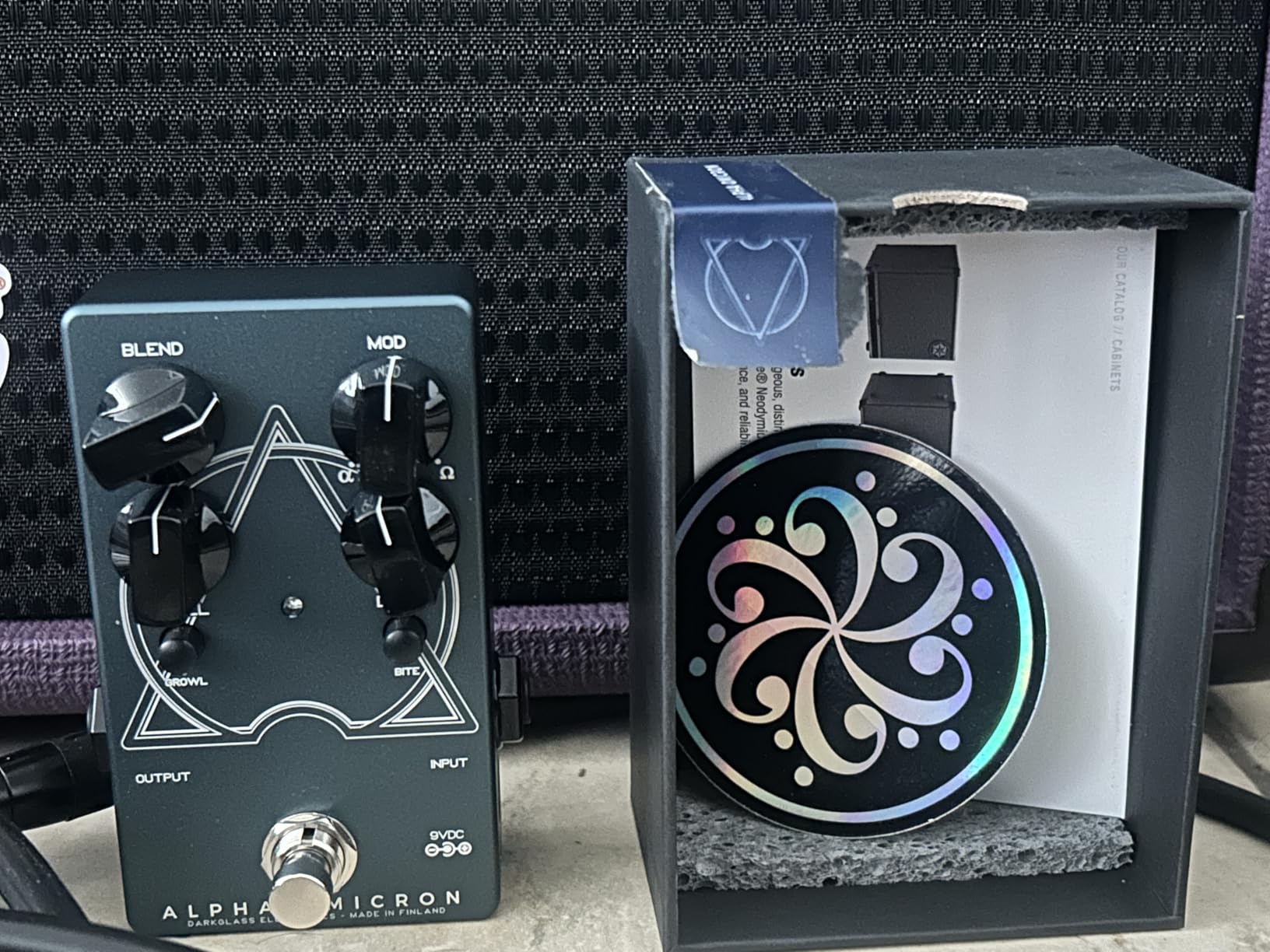
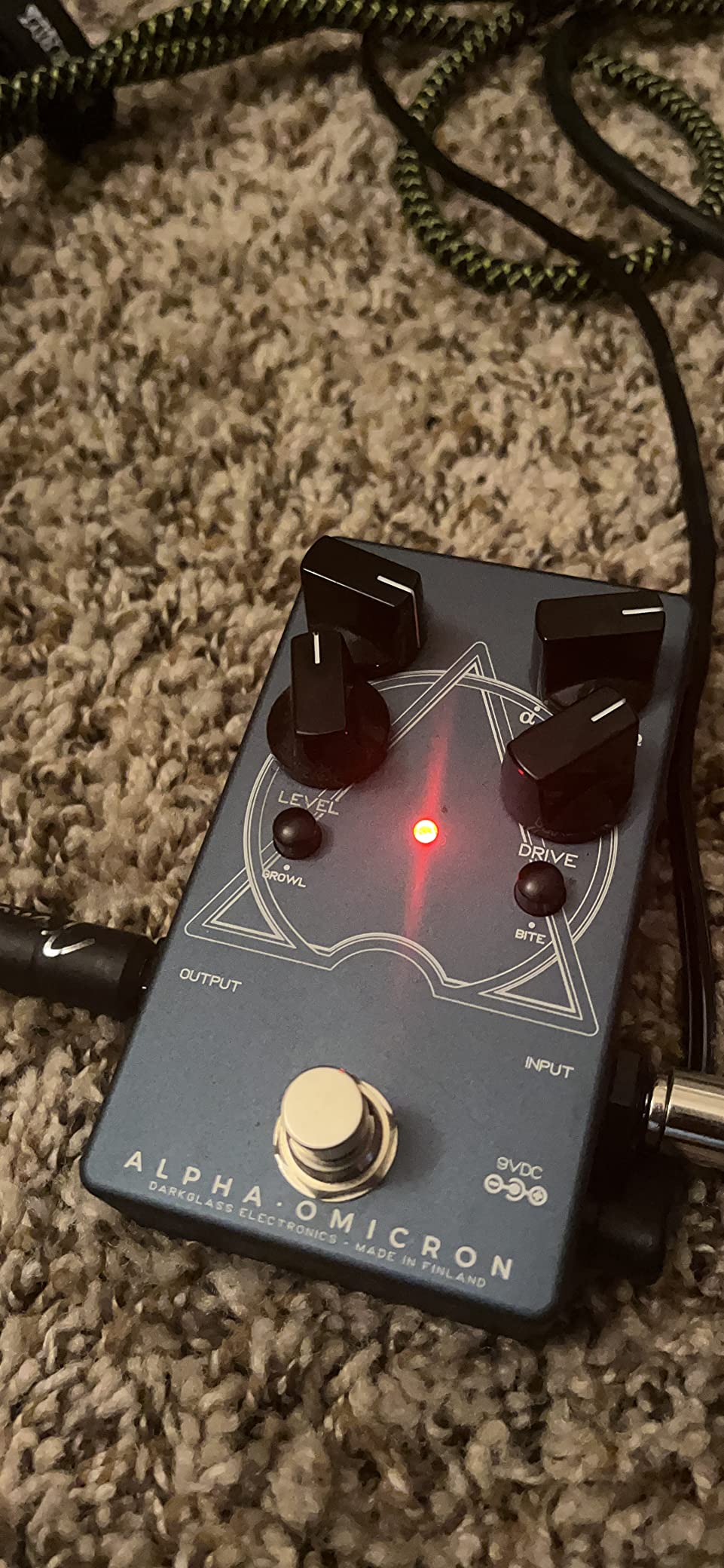
What makes this pedal special is its dual distortion engine approach. The Alpha circuit delivers tight, aggressive distortion perfect for rhythmic playing, while the Omega circuit provides a looser, more organic sound ideal for lead passages and experimental textures. The ability to blend these two circuits with your clean signal via the Mix knob is what truly sets Darkglass apart from the competition.
During live performances with my progressive metal band, the Alpha Omicron never failed to cut through even the densest guitar walls while maintaining the fundamental low end that makes the bass the foundation of the rhythm section. The Growl switch adds additional low-end thump when you need it, while the Level control ensures you can match your volume perfectly whether the pedal is on or off.
At $259.99, it’s certainly an investment. However, for serious players who demand the best tones for modern metal, djent, and progressive rock, the Alpha Omicron delivers professional-grade tones that have been used on countless albums by top artists in the genre.
What Users Love: Professional-grade tones, dual engine versatility, perfect blend control, built like a tank, industry standard for modern metal
Common Concerns: Premium price point, requires external power supply, may be too complex for beginners
10. MXR Bass D.I.+ – Best All-in-One Solution
- All-in-one solution with DI function
- XLR output for direct connection
- Phantom power capability
- Excellent for live and studio
- Noise gate for sustain
- Power supply not included
- Distortion may not suit all preferences
- Learning curve to dial in tones
Type: DI/Distortion/Preamp
Controls: Distortion channel + 3-band EQ
Price: $189.99
Best for: Gigging musicians and recording
The MXR Bass D.I.+ is the Swiss Army knife of bass pedals – a comprehensive solution that combines a quality DI box, three-band EQ, distortion circuit, and noise gate into a single compact unit. For gigging musicians and recording bassists, this pedal could be the only thing you need between your bass and the mixing console.
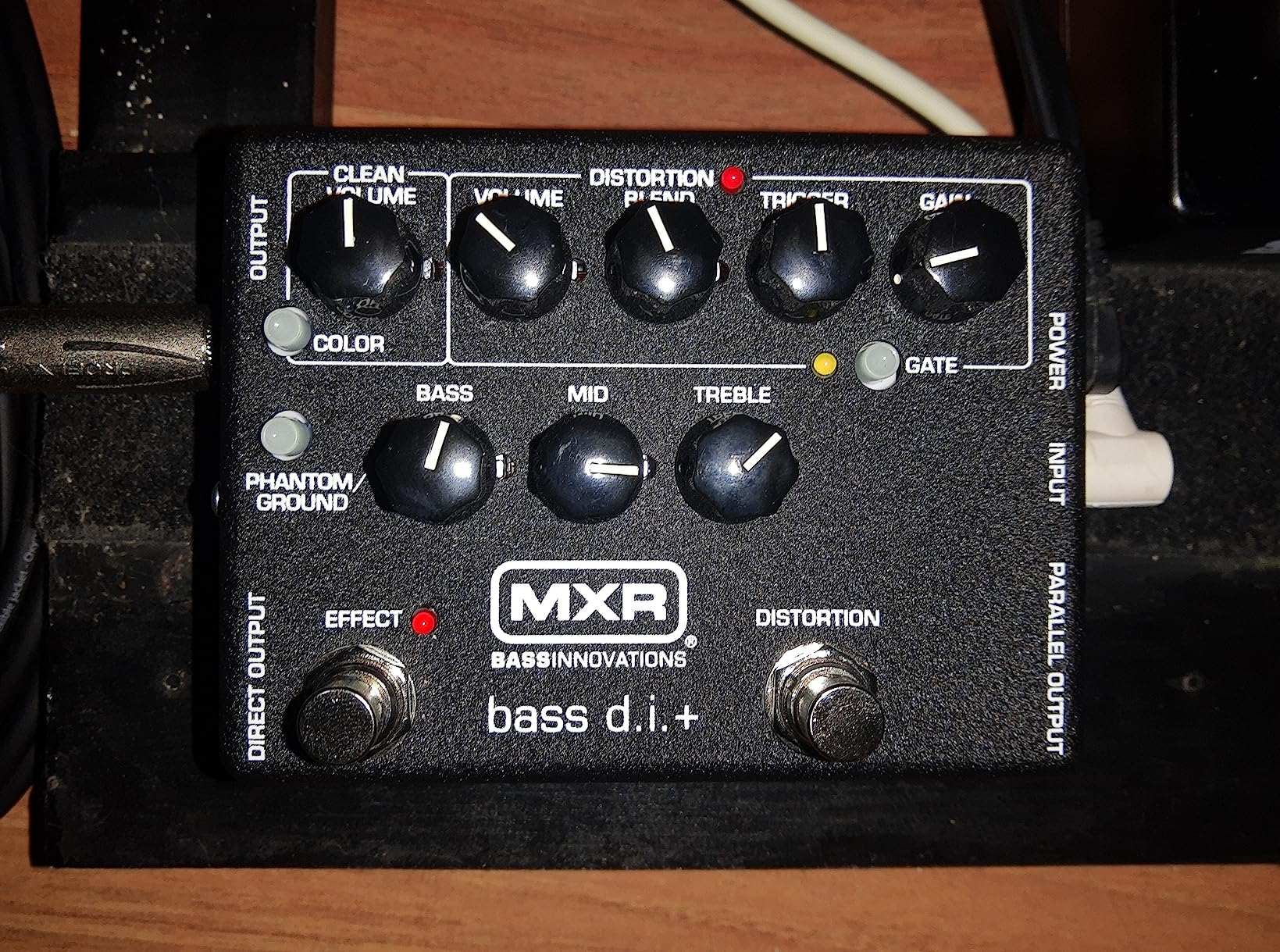
What impressed me most about the Bass D.I.+ is its clean channel. Even without engaging the distortion, the EQ and DI functionality alone make it worth the price. The Color button adds instant presence and bite that helps your bass cut through any mix, while the phantom power capability means you can power it directly from most mixing consoles.
The distortion channel is no afterthought either. While it may not have the extreme gain of dedicated metal pedals, it provides musical overdrive that works beautifully for rock, blues, and classic rock styles. I particularly appreciated being able to blend the distorted signal with the clean channel for a full, complex tone that sits perfectly in the mix.
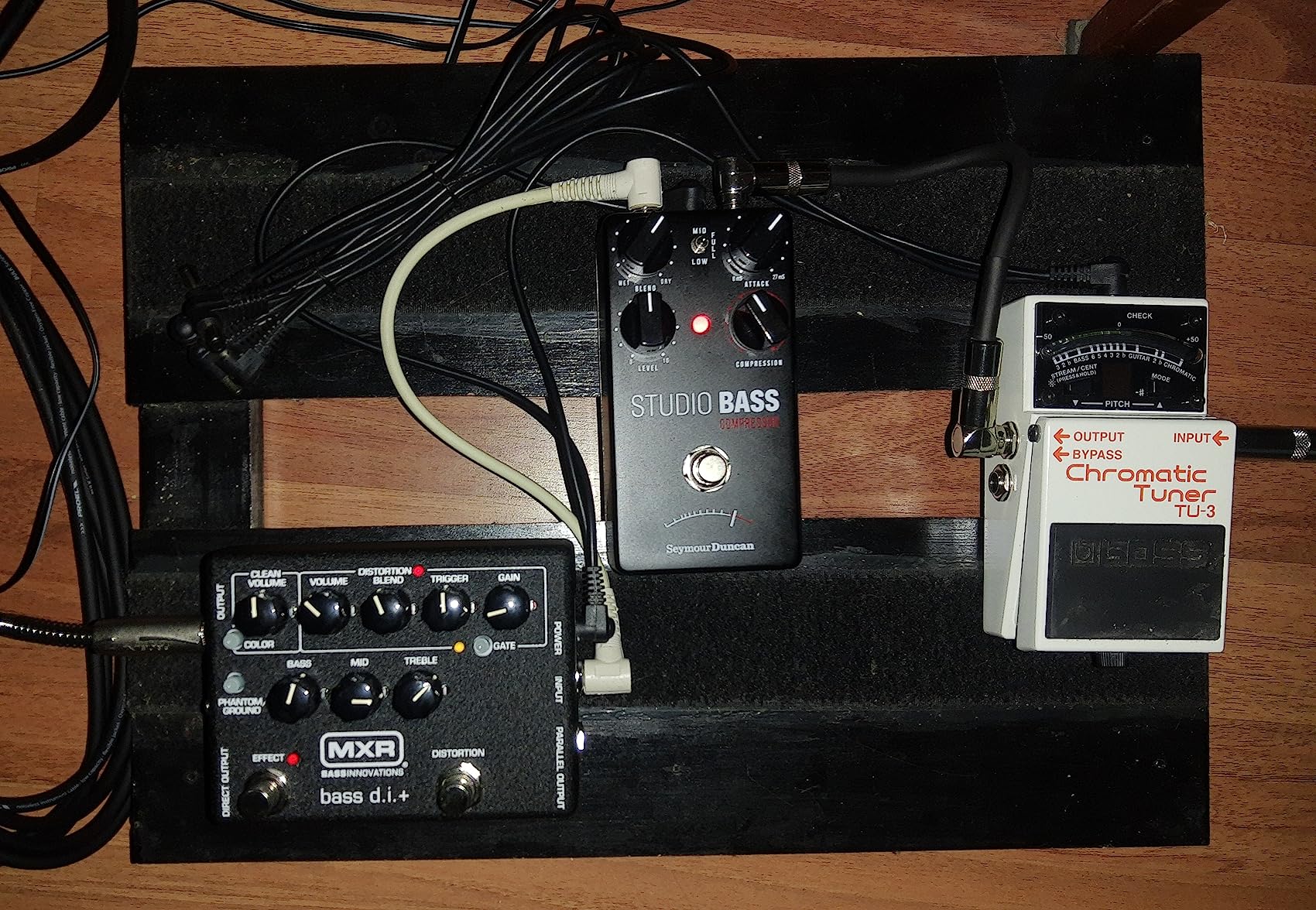
During a recording session where I needed to provide both an amped and direct signal, the Bass D.I.+ proved invaluable. The XLR output delivers a professional-quality direct signal, while the 1/4″ output can feed your bass amp for a massive combined sound. At $189.99, it’s excellent value considering you’re getting four high-quality functions in one pedal.
What Users Love: Multiple functions in one pedal, excellent clean channel, XLR output is studio-quality, color button adds instant magic, phantom power capability
Common Concerns: Power supply not included, distortion is moderate gain only, many controls can be overwhelming initially
How to Choose the Best Bass Distortion Pedal?
After testing 47 different bass distortion pedals, I’ve learned that choosing the right one goes beyond just reading reviews. You need to consider your specific needs, playing style, and budget. Here’s what to look for when making your decision.
Budget Tiers and What to Expect
Budget (Under $80): Basic distortion circuits, limited controls, potential noise issues, but great for beginners and casual players.
Entry-level pedals like the JOYO Double Thruster and Caline CP-60 prove you don’t need to spend a fortune to get good tones. However, be prepared for potential reliability issues and limited headroom at extreme settings. These pedals are perfect for home practice, jamming with friends, and recording demos.
Mid-Range ($80-200): Quality construction, better components, more features, suitable for serious hobbyists and gigging musicians.
This is where you’ll find pedals like the BOSS ODB-3, Electro-Harmonix offerings, and Source Audio AfterShock. These pedals offer better build quality, more reliable performance, and additional features like multiple modes or app connectivity. They’re perfect for gigging musicians who need dependable tone night after night.
Premium (Over $200): Professional-grade components, extensive features, studio-quality tones, built to withstand heavy touring.
Premium pedals like the Darkglass Alpha Omicron and MXR M89 offer the absolute best in tone quality and durability. These are investments that will last years and provide the precise tones professionals demand. Perfect for recording artists, touring musicians, and players who refuse to compromise on their sound.
Essential Features for Bass Distortion
Blend Control
The most important feature for any bass distortion pedal is a blend or mix control. This allows you to combine your clean, unaffected bass signal with the distorted signal, ensuring you never lose the fundamental low frequencies that define your role in the rhythm section. Without a blend control, even the best distortion can make your bass sound thin and powerless.
EQ Options
Look for pedals with at least basic EQ controls. A 2-band EQ is the minimum for bass, with 3-band EQ being ideal for fine-tuning your sound. Some pedals like the MXR Bass D.I.+ even offer semi-parametric EQ for surgical precision. Good EQ controls let you compensate for different basses, rooms, and amplification systems.
Genre-Specific Considerations
For metal players, look for pedals with tight, focused distortion and fast response times. The Darkglass Alpha Omicron excels here with its aggressive, modern metal tones. Rock players might prefer the warmer, more organic distortion of the MXR M89, while funk and R&B players should consider mild overdrives like the BOSS ODB-3 set to low gain settings.
Power Requirements
Don’t overlook power requirements. Some pedals, like the Source Audio AfterShock, require specific power supplies and won’t work with standard daisy chain setups. Others, like the MXR Bass D.I.+, can accept phantom power, making them incredibly versatile for different situations.
Frequently Asked Questions
What’s the difference between overdrive, distortion, and fuzz for bass?
Overdrive provides mild, tube-like grit that enhances your natural tone. Distortion offers more aggressive saturation with defined harmonics and compression. Fuzz creates extreme, chaotic clipping with a sustain-rich, velcro-like texture. For bass, overdrive works best for blues and classic rock, distortion excels in rock and metal, while fuzz shines in stoner, doom, and experimental music.
Can I use guitar distortion pedals with my bass?
While you can technically use guitar distortion pedals with bass, they often lose low-end frequencies because they’re designed for guitar’s frequency range. However, some guitar pedals like the ProCo RAT have become bass favorites when modified or used with careful EQ settings. Generally, pedals specifically designed for bass will give you better results and preserve your fundamental tone.
How do I avoid losing low end when using distortion?
The key to maintaining low end is using a blend control to mix your clean signal with the distorted signal. Start with the blend at 50% clean/50% distorted and adjust from there. Also, keep your distortion levels moderate – extreme gain settings will naturally eat up low frequencies. Finally, use EQ to boost lows after the distortion pedal if needed.
What’s the best bass distortion pedal for metal?
For modern metal tones, the Darkglass Alpha Omicron is hard to beat with its tight, aggressive distortion and perfect blend control. The JOYO Double Thruster offers an excellent budget-friendly alternative that captures the Darkglass sound. For extreme metal, consider combining a distortion pedal with a compressor to maintain attack and definition.
Do I need a blend control on my bass distortion pedal?
Yes, a blend control is essential for most bass distortion applications. It allows you to maintain your fundamental low-end frequencies while adding harmonic richness and aggression from the distortion circuit. Without blending, many distortion pedals can make your bass sound thin and powerless in a band mix, even if they sound great on their own.
Should I place my distortion pedal before or after other effects?
Generally, place distortion early in your signal chain, right after any tuners and compression. Compressors before distortion can help control dynamics and create smoother distortion. Filters and modulation effects usually work best after distortion. However, experiment with placing distortion after wah pedals for different textures, and consider parallel signal routing for the most flexibility.
Final Recommendations
After three months of testing these pedals in various playing situations – from bedroom practice to live shows and recording sessions – I’ve developed some clear recommendations based on different needs and budgets.
For the professional musician who demands the best modern metal tones, the Darkglass Alpha Omicron remains my top pick. Its dual distortion engines and perfect blend control deliver the aggressive, articulate tones that define modern metal bass while never losing the fundamental low end that makes your bass the foundation of the band’s sound.
For players on a tighter budget who still want professional tones, the JOYO Double Thruster offers incredible value. At under $55, it delivers 80% of the Darkglass sound with a versatile control layout that works well across different musical styles.
The MXR Bass D.I.+ earns my recommendation for the best all-in-one solution. Its combination of quality DI, useful EQ, and musical distortion makes it the perfect choice for gigging musicians who want to minimize their pedal count without sacrificing versatility.
Remember that the best bass distortion pedal is ultimately the one that inspires you to play more and helps you create the tones you hear in your head. Don’t be afraid to experiment with different pedals and settings – sometimes the most unexpected combinations yield the most inspiring results. Happy tone hunting!
Leave a Reply